Want to know how to care for your labradoodle at home? You’re in the right place. This article is for anyone who has a labradoodle or another doodle, or is thinking about getting one. You’ll learn what to do daily, what to do weekly and when to visit the groomer. This helps prevent tangles and keeps the coat healthy. You’ll also discover which products can help, including the Curl Club grooming range and the Pawness Curved Slicker Brush. That way, brushing and bath time become more enjoyable for both you and your dog.
Good labradoodle care starts with the basics
Caring for a labradoodle is about more than brushing and bathing. A labradoodle is a cross between a labrador and a poodle, with a cheerful, clever and sociable personality. Every labradoodle needs daily exercise and mental stimulation. Think of a long walk, a game of fetch or a puzzle filled with kibble. A content dog is also more likely to sit calmly during grooming. Try to plan your walk before your brushing session. With less energy to burn, your dog may have a little more patience. When your dog sits calmly, everything goes more smoothly. It’s not a strict rule, but it works for many owners. This helps make grooming a regular, enjoyable part of your day.
Nutrition is part of good coat care too. Labradoodles need quality food suited to their life stage. A puppy has different needs from an adult or senior dog. Ask your vet for advice if you’re unsure what to choose. Check the ears and eyes regularly too, so you can spot potential problems early. Have a quick look inside the ears and around the muzzle for moisture or dirt. A brief daily check is enough. Getting the basics right makes everything else easier.
Understanding the doodle coat
A doodle’s coat is different from that of many other dogs. Most doodles shed very little. That sounds great for your living room, but there’s a downside too. Loose hairs stay trapped in the coat, where they tangle with new growth. A labradoodle with a shedding coat is therefore the exception. Because your dog sheds so little, their coat needs extra care. Check the skin beneath the hair too. Notice any redness or see your dog scratching frequently? Ask your vet for advice. That’s always better than guessing.
Every dog looks a little different. Some doodles have curls; others have waves or an almost straight coat. This depends on the poodle and Labrador ancestry in their family tree. Ask your breeder about the parents and the litter. Your puppy’s mother can also give you a good idea of what to expect. This helps you understand early on whether your dog is likely to have a longer coat that needs more attention. A good breeder will happily talk you through it. Ask about grooming and the parents’ behaviour too. It all helps you build a realistic picture
Keeping the coat soft with the right brush
Brushing is the most important part of your routine. Regular brushing prevents tangles and matting. It removes loose hair and dead skin cells, stimulates circulation and distributes natural oils. It’s also a lovely way to bond with your dog. Start at the paws and work your way up. Make sure you brush right down to the base of the coat. Work in small sections, lifting the hair as you go. Follow up with a comb to make sure you can get through every section. This helps you reach the layer closest to the roots, too. Take your time.
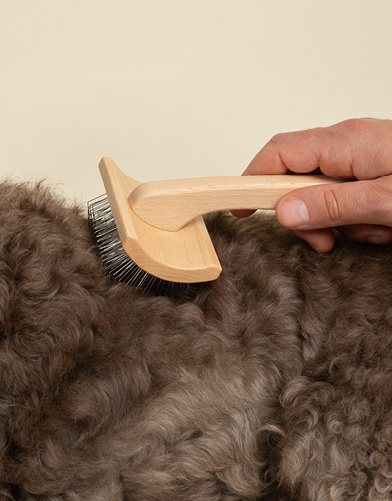
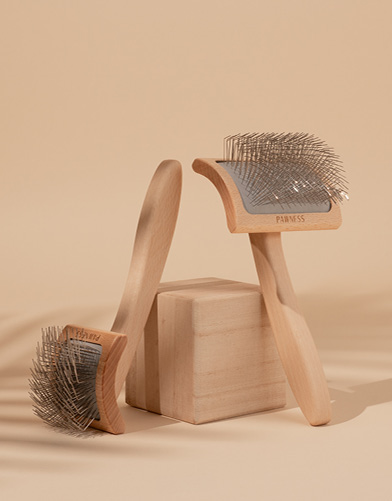
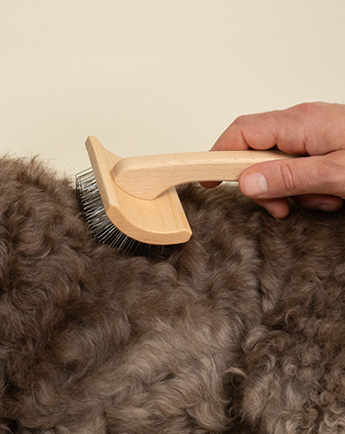
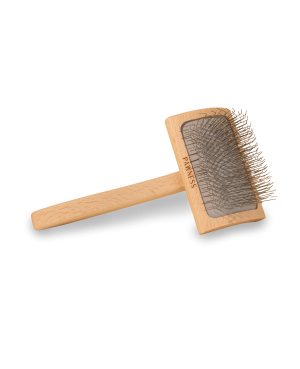
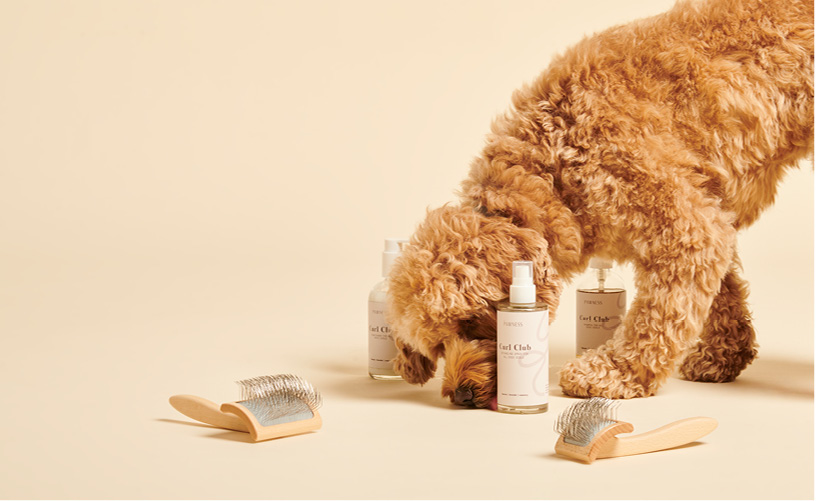
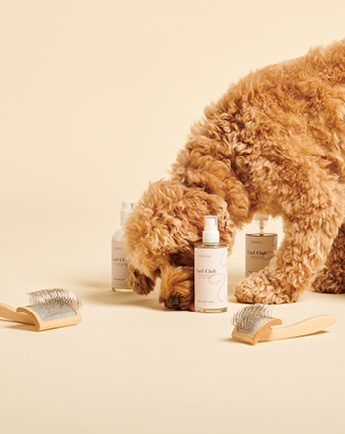
A slicker brush is the most popular choice for curly coats. The Pawness Curved Slicker Brush has curved metal pins that glide effortlessly through thick coats and remove tangles without pulling. The extra-long pins reach deep into the coat. It features an FSC-certified beechwood handle, a soft grip, and a rubber cushion. Size S suits small dogs and delicate areas such as the paws and muzzle. Size M is for larger dogs with fuller coats. The brush is free from glue, varnish and other animal products. Using it regularly can also help you save on grooming costs. A beautiful coat doesn’t happen overnight. It develops with your routine.
Make it a calm moment together. Get your puppy used to having their paws lifted early on, and reward them afterwards. Brush extra gently around the armpits and ears. When brushing the face, you can gently support your dog’s head with one hand under the chin. It’s a handy moment to check their teeth too. This helps your puppy get used to being touched. It can also make things easier around other dogs and at the vet later on. Keep sessions short and cheerful. Always finish with a treat.
Bathing with Curl Club
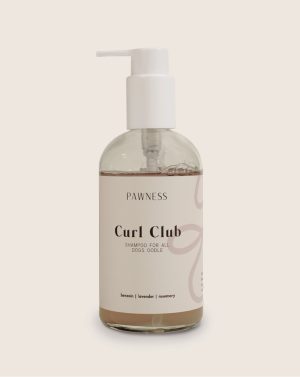
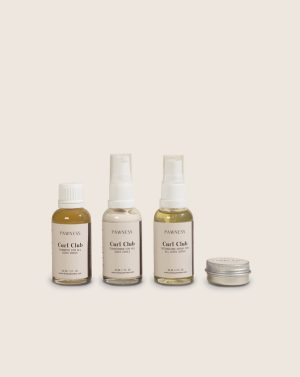
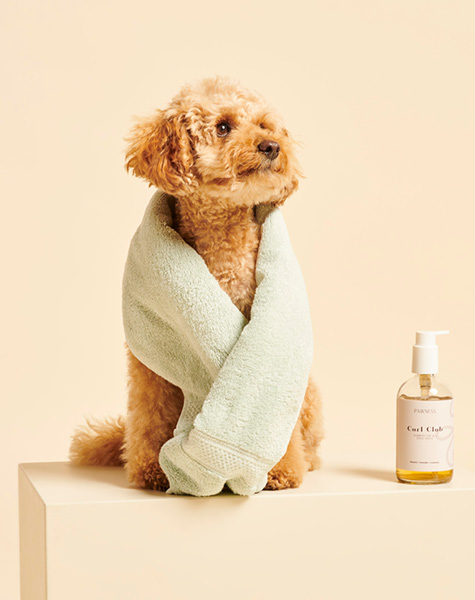
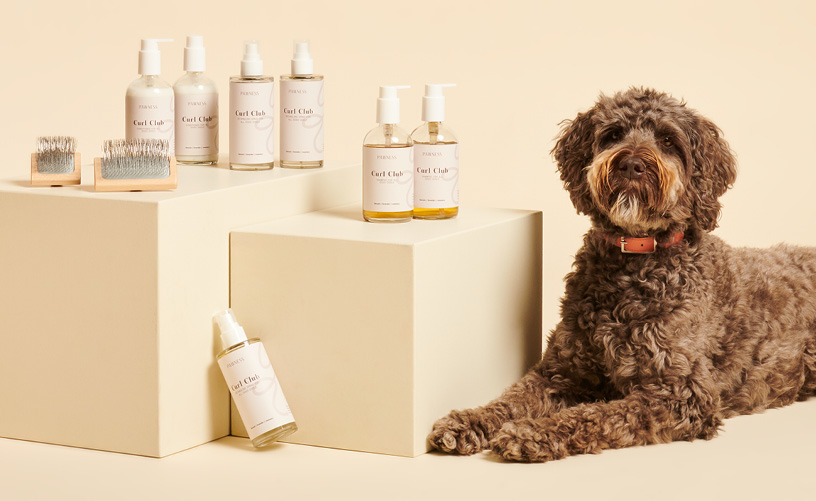
Bathing too often can dry out the skin, so wash your labradoodle every 3 to 4 weeks. Keep an eye on dirt and odour in between, as every dog is different. Curl Club is specially developed for all oodle breeds, from labradoodles to poodles. Curl Club Shampoo is gentle and deeply cleansing. It hydrates without disturbing the natural balance. The result is a light, clean, soft and shiny coat that tangles less easily. Carefully brush out all tangles first. Washing a tangled coat only makes the tangles worse. Next, wet the coat, massage in the shampoo, and rinse thoroughly. Repeat if the coat is particularly dirty. Use lukewarm water and take your time. It makes the experience calmer for both of you.
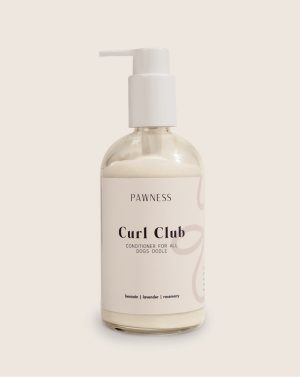
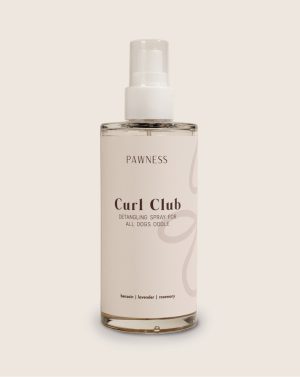
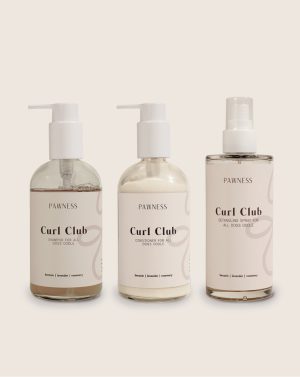
Follow with Curl Club Conditioner on the wet coat. Work it through the lengths, leave it on briefly and rinse thoroughly. It deeply nourishes and helps detangle, leaving the coat soft, smooth and shiny. Finish with Curl Club Detangling Spray. Mist lightly over the coat, massage it in and avoid the eyes and ears. Then gently brush through. It also freshens up the coat between baths.
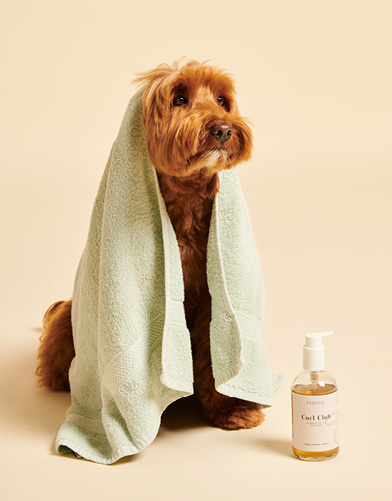
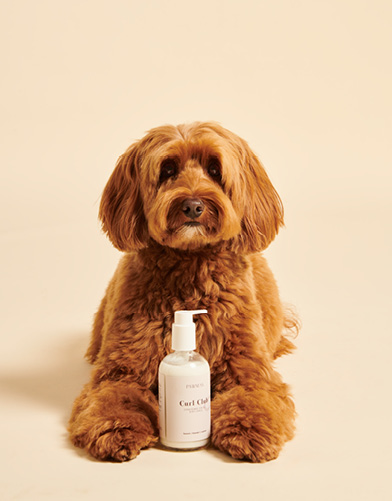
All three products are vegan, cruelty-free, and tested by groomers. They contain benzoin oil, lavender oil and rosemary oil. Your routine is simple: shampoo, conditioner, spray. Afterwards, dry your dog with a towel or a dog dryer on a warm setting. Work in small sections here too, and keep the dryer at a distance. You can also brush gently as you dry the coat. This helps keep everything loose and airy.
The adult coat and the first grooming appointment
As the puppy coat gives way to the adult coat, tangles form more easily. Without regular care, the coat can become matted, especially behind the ears. Run your fingers through the coat every week. Feel a firm patch? Gently work on it with detangling spray and a brush. Increase brushing during this stage and follow with a comb. Book the first grooming appointment early so your puppy can get used to the salon. This makes future visits less stressful. Bring a tasty treat and tell the groomer what your dog enjoys. A short first visit is often enough. After that, have your labradoodle’s coat trimmed regularly. This keeps the cut neat and the coat manageable. How often your dog needs a trim depends on their coat and the length you choose.
Not sure which length to choose? We recommend discussing it with your groomer. A longer coat needs more care and brushing than a shorter one. The Curl Club products help you care for the coat at home between grooming appointments.
Now you know all the steps. Pick up the brush today and build your routine little by little. Take it slowly at first. Finding the right routine takes time, and that’s completely normal.
I’m Denise, the founder of Pawness. The company was born out of my love for my dog, Bo, and my search for fair, beautiful products for dogs. I believe that every choice matters: for your dog, for the planet, and for the people behind the products. Through these blogs, I help puppy parents make more conscious choices—without making it complicated.