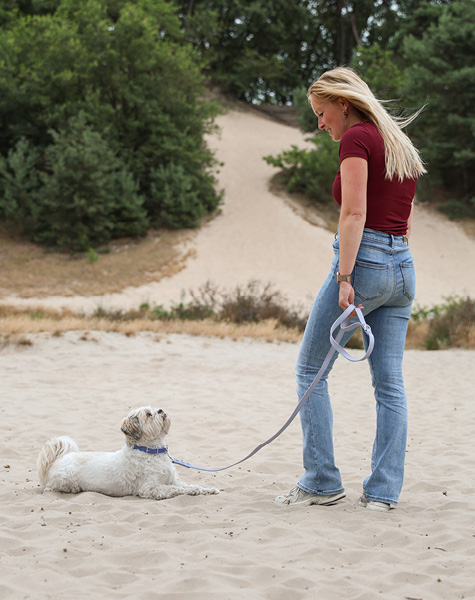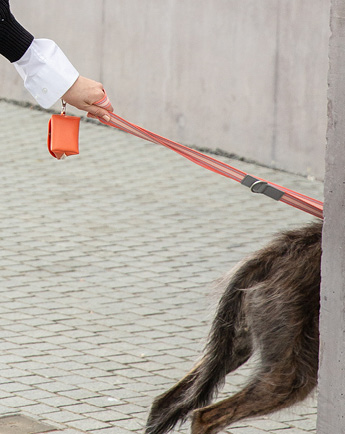
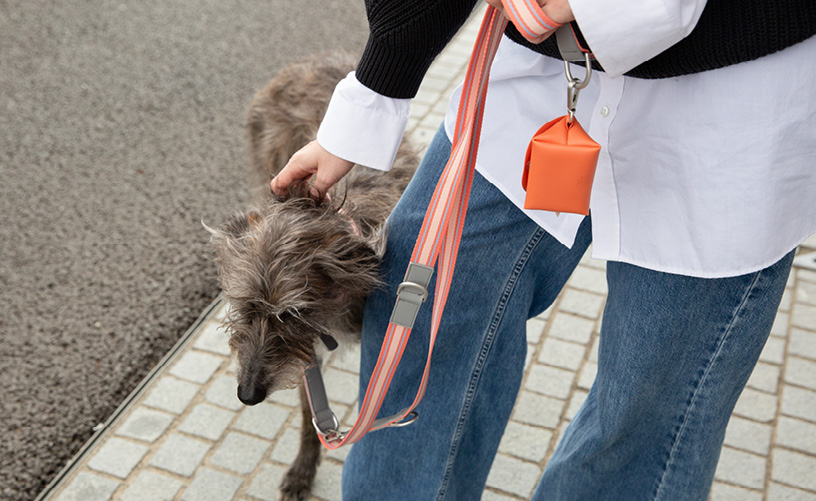
We all know that one dog who walks their human instead of the other way around. If you’re reading this blog, chances are that you’re that human. When your dog pulls hard on the leash, it can be frustrating and take all the joy out of your walks together. That’s a shame, because going for walks is a fantastic way to build a strong bond with your dog. It’s probably their favourite moment of the day, and they’ll also benefit from learning to walk more relaxed. That’s why, in this blog, we’re sharing 5 tips to help your dog stop pulling on the leash.
1. Make sure the collar is the right size
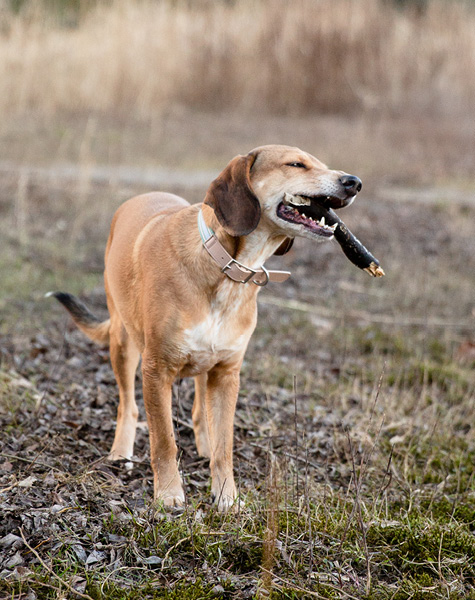
This may sound obvious – after all, you wouldn’t buy a collar that’s too big or too small, right? But you might be surprised to learn that most collars are actually fitted too low on the neck and are therefore too large. When a dog’s collar sits too low, it can cause breathing issues and even slight choking while they’re pulling. It also allows the dog to keep leaning into the collar and pulling forward – which they’ll continue to do.
The correct position for the collar is high up on the neck. Always make sure you can comfortably slide two fingers between the collar and your dog’s neck. That way you know the collar isn’t too tight, but also not so loose that it can slip down. With the collar in the right place, your dog gets clearer feedback from the leash, which helps reduce pulling – mainly because their head will be redirected to the side more quickly and they can’t push as much with their shoulders.
2. Keep the leash relaxed so your dog pulls less
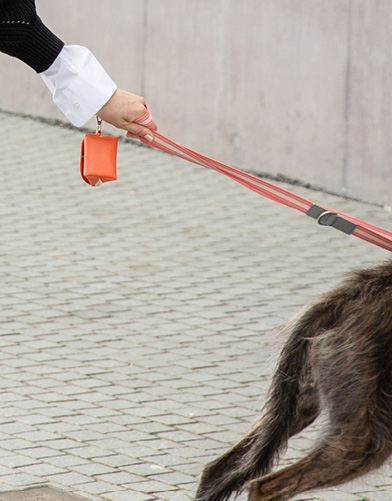
The best anti-pull leash is a loose, hanging leash. When you keep the leash tight all the time, your dog gets used to that constant tension. As a result, they can’t tell the difference between good and unwanted behaviour. Make sure the leash hangs loosely whenever you’re standing still or when your dog is doing their business.
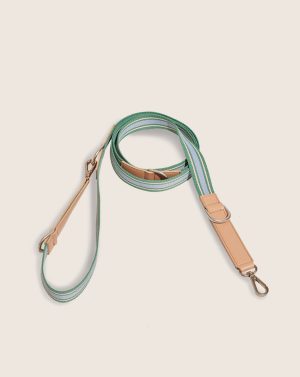
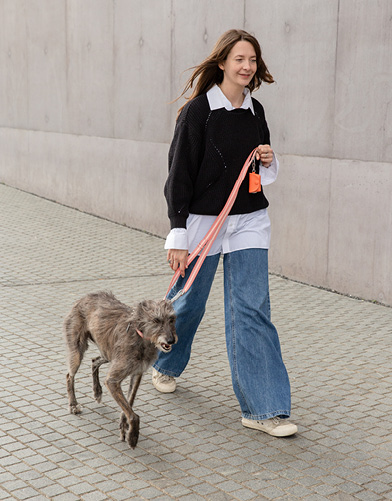
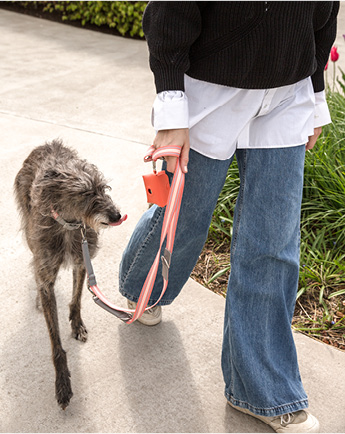
This is also exactly why flexi leashes can actually make pulling worse. While a retractable leash can be practical, it’s not a good choice if you want to reduce pulling. The best leash to prevent pulling is a standard leash about 180 centimetres long, like our vegan leather Bo leash.
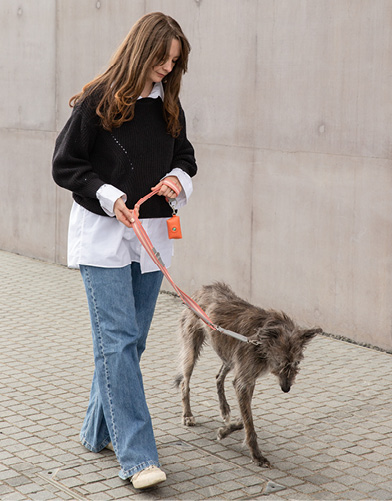
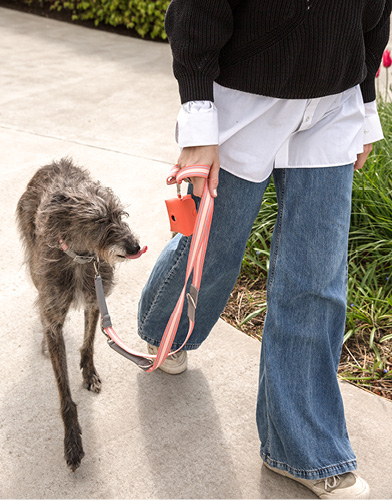
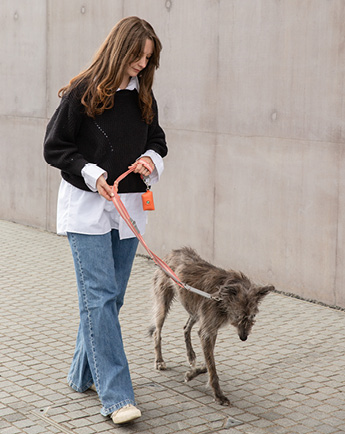
Vegan Leren riem Bo – Mauve Mist
3. Avoid the trigger that causes pulling
Many dogs start pulling because they see something they want to chase or reach. A helpful training exercise is to grab the leash lower down with your free hand and calmly turn around together. This way, you apply a smaller correction to the neck. It’s important that you clearly move in the opposite direction yourself as well. Your dog will want to stay with you and follow you, and you can support this with your voice by saying “come.”
As soon as your dog turns around and walks with you again, let the leash hang loosely and reward them. You’ll notice that the more you practise this, the better it will go.
4. Use a headcollar temporarily
A headcollar may look a bit intense and unfriendly at first, but it’s actually kinder than it seems. When you don’t see much progress with just a regular collar, a headcollar – which has a strap over the snout – can be a very useful aid. When the dog pulls, their head will turn to the side, and they’ll automatically change direction. Used correctly, this doesn’t hurt and doesn’t strain the neck.
Don’t use a headcollar with a dog who often lunges or suddenly takes off at full speed.
You’ll likely notice results quickly when using a headcollar, and from there you can gradually practise more and more with just the regular collar. Once you’ve worked together on relaxed walks, you can swap the collar for one of our beautiful harnesses that pair perfectly with our leashes, such as the vegan leather Bo harness.
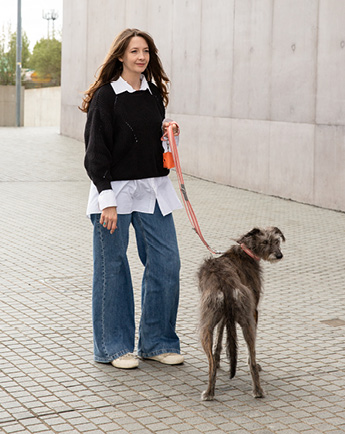
5. Be consistent and teach your dog not to pull
This is by far the most important tip of all: be incredibly consistent. In the beginning, you might feel like a referee, but if you really stick with it, your dog will learn what’s being asked of them. If you practise as their human but you’re not consistent, your dog will get mixed signals and won’t understand what you expect.
Over time, you’ll notice that it all becomes easier and easier, and that sense of calm will return to your walks together!
Bron Blog: 5 tips om te zorgen dat je hond minder trekt
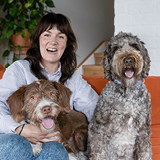
I’m Denise, the founder of Pawness. The company was born out of my love for my dog, Bo, and my search for fair, beautiful products for dogs. I believe that every choice matters: for your dog, for the planet, and for the people behind the products. Through these blogs, I help puppy parents make more conscious choices—without making it complicated.