Welcoming a new dog or puppy into your home is always something to celebrate. But your new friend also needs to be introduced to the other members of the household. You might already have one or more animals at home. In that case, your dog will first need to get used to your other dog, cat, rabbit, or other pet. Of course, you hope they’ll become best friends, but the real goal is simply for them to live together peacefully. So how do you help your dog live alongside another pet? In this article, we share 8 tips to help your dog get used to another pet.
Which other pets are a good match for a dog
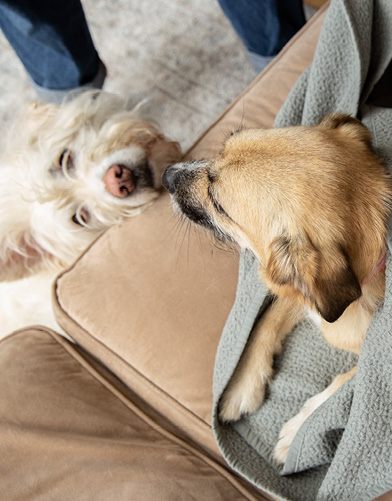
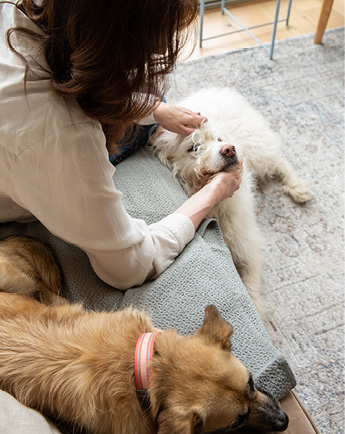
To help your dog get used to another pet, it’s useful to know which animals generally get along well with dogs. This depends largely on your dog’s personality and how well they’ve been socialised. Some dogs want to chase anything that moves, while others can happily live with almost any pet. In general, dogs tend to get along more easily with other predators, such as dogs, cats, and ferrets. More importantly, dogs usually do best with animals that are used to being around dogs. When an animal doesn’t run away, most dogs won’t show chasing or hunting behaviour. With good supervision, dogs can often learn to live peacefully with rabbits, guinea pigs, birds, and other small pets that are considered prey animals. Even dogs that chase cats outdoors can often live very well with a cat inside the home.
Which other pets are a good match for a dog
Pets that run away from dogs are usually not a good match to live with a dog. Running and hiding can trigger a dog’s hunting instinct, putting the fleeing animal at risk. An animal that is very afraid of dogs will also be stressed whenever it sees or smells a dog. Sadly, this can even happen with a very sweet, calm dog who would never intentionally hurt your other pets. Dogs with a strong prey drive may also attack animals that don’t run away, simply because of their scent. These dogs generally cannot live with prey animals and often not with cats or ferrets either.
Playful dogs and puppies can sometimes play too roughly with other pets, which can (unintentionally) put them in danger. Be extra careful with small, fragile animals such as young cats, rabbits, and rodents. In these cases, it’s better to keep your dog separated from your other pets. Often, once your dog is older and calmer, introductions to the other pets will be possible.
Dog and another pet: 8 tips to help your dog get used to another animal
Tip 1: Start the introduction before your dog comes home
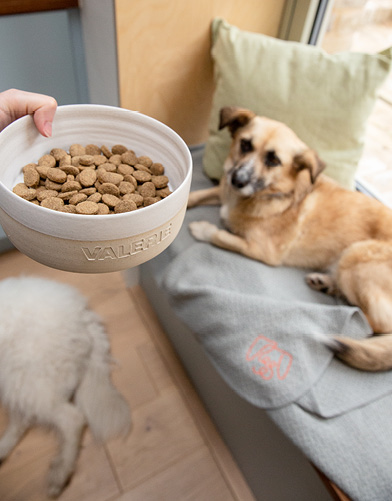
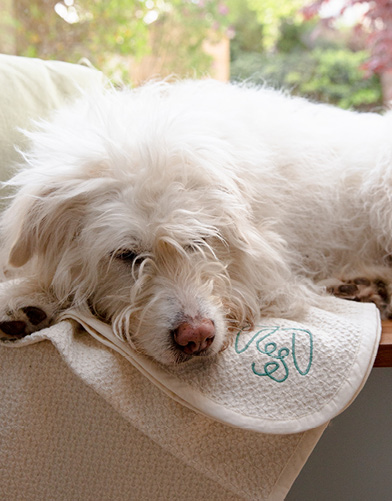
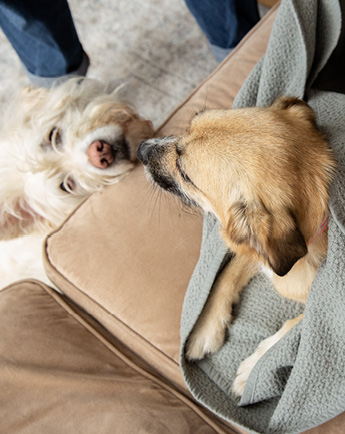
Ask the breeder or shelter to put a blanket in with your new dog. Do the same for your existing pets. A week or two before you bring your dog home, swap the blankets. This way, your pets can already get used to each other’s scent. When your puppy or new dog comes home for the first time, not everything will feel completely new and overwhelming.
Tip 2: Know what your dog already knows
Before you bring your new friend home, ask what they’re already used to. Check with the breeder or shelter what has been done in terms of socialisation. The more often and the earlier a puppy has seen other animals, the less they tend to react to them later in life. If the breeder has introduced the puppy to other animals at a young age, the adjustment period at home will usually be easier. For a rescue dog, ask the shelter what they already know about the dog. Often, a dog has already shown whether they get along with cats. A dog who ignores cats is also less likely to react strongly to other pets. Still, you should always proceed with caution.
Tip 3: Keep things calm
Puppies—and many adult dogs, too—are often full of excitement when they discover their new home. Some animals find it very scary when an exuberant puppy or dog rushes towards them. Other animals, like ferrets and older dogs, can quickly find this level of energy too much. If your new dog causes stress for your other pets, the introduction won’t go the way you’d hoped. Take your new friend for a good walk first, and introduce them to your other pets one by one, only when they’re calm.
It can help to let your dog explore one room on their own first. Once they’ve checked out the whole room, they’ll usually be calmer. Then introduce your other pets in that same room, to keep the number of new stimuli as low as possible. Always introduce new dogs to your existing dogs outside and on-leash. This way, your new dog won’t be seen as an intruder in your other dog’s territory.
Tip 4: Use a crate or playpen (for puppies)
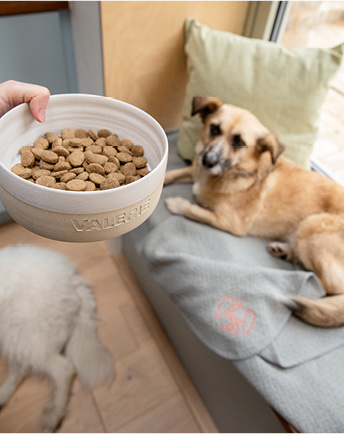
Your new dog needs a safe space of their own. This is often a crate or puppy playpen. This is where you keep their food bowl, toys, and bed. When you leave the house, your puppy can safely stay in this space without getting into trouble. A crate or playpen can also be a great tool as your dog gets used to other pets. This type of introduction is especially recommended with prey animals and cats that are not used to dogs. Only let the other pet into the room when your puppy is in the crate after a walk. This way, your puppy can’t chase them.
Give your puppy something tasty to chew on, then let your cat, rabbit, or other pet into the room. This pet can now choose how close they want to get. Your puppy will start to associate the other animal’s presence with “relaxing in my own safe spot while enjoying something tasty.” Feeding both animals on opposite sides of the crate or playpen can work very well too—especially when your puppy stays focused on the other pet or is too nervous to come closer. Only when both animals feel comfortable near each other should you let them meet on-leash.
Tip 5: Make it fun for everyone
You want your dog to get used to your other pets, but your other pets also need time to adjust to the dog. This new housemate might be noisy, energetic, and “stealing” a lot of your attention. Make sure the socialisation process stays positive for all of your pets. Give them both treats when they’re in the same room and behaving well. Give them both attention. By greeting and cuddling your other pets as well, you show your dog that they are part of the family too. This is not only nice for your other pet, but it also speeds up the bonding process.
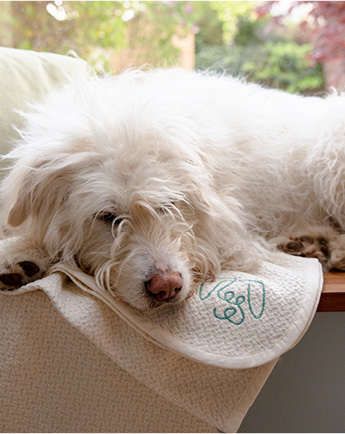
Take a break as soon as you notice that one of the animals is becoming stressed. Older dogs and cats that are used to dogs often find puppies overwhelming and need regular quiet time on their own. Make sure they get it. Otherwise, a successful introduction can suddenly turn into a growl or a swipe. Give each animal its own safe space that the other can’t reach. For rabbits, rodents, and ferrets this might be a hutch with a small opening; for cats, a high hiding spot often works best.
Tip 6: Give it time
It’s very common for pets not to accept each other right after the first meeting, let alone become best friends. That doesn’t mean it won’t happen! Keep working on socialisation and keep the animals separated in between. Break the process down into small steps. At first, they might only sniff each other through the crate; later, when both are calm, they can meet on-leash. If that goes well, the dog can eventually be off-leash while doing something else in the room. This whole process can take anywhere from a few weeks to several months.
If you want both animals to be loose (and supervised) in the same room, patience is key. You can’t force a good relationship. Cats and ferrets, for example, may not enjoy puppies at all because of their hectic behaviour. In that case, keep them separated and bring them together once a week for short socialisation sessions. As your dog grows older and calmer, you can slowly increase the frequency.
Tip 7: Make being together feel normal
Your new dog needs to learn that the other pets also live in “their” house. Becoming friends would be wonderful, but simple mutual acceptance is already a win. Being in the same room should feel normal. So try not to focus too much on the other pets. Play a game with your dog while your rabbit is hopping around the room. Teach your dog a new cue while your cat is lying on the sofa. Give your puppy something to chew on while you hold your guinea pig on your lap. These are just a few examples of how you can show your dog that life goes on even when another animal is around. Only do this after the first introductions, once your dog is no longer overly reactive to your other pet.
Tip 8: Discourage chasing and reward good behaviour
We really can’t say it often enough: training is all about rewarding, rewarding, rewarding! Give both pets treats during the first meetings, so they build a positive association with each other. Also reward every moment your new dog ignores or calmly tolerates your other pet. These can be very tiny steps. Has your puppy stopped barking at the sleeping cat? Great—reward it! Has your dog stopped chasing the rabbit? Reward that too! It may seem cute when your dog plays with your other pets, but stay alert. Chasing is extremely self-rewarding, and play can suddenly tip over into real hunting behaviour.
Is your dog getting too excited or too rough with your other pet? Give them a time-out: put your dog in another room for a few minutes and only let them back when they’re calm. If chasing means all social contact stops, most dogs will quickly choose not to chase. If both animals clearly enjoy the game—especially when they’re both predators—then it can be fine. Just make sure you always supervise them. This way, you help your dog learn to live safely with another pet.
Sources: “8 Tips for Helping Your Dog Get Used to Another Pet”
– Onze hond
– Easy Peasy Puppy Squeesey, Steve Mann
– LICG.nl
– https://www.fretteninformatie.nl/algemeen/gedrag/andere_dieren.html
Written by: Jori Noordenbos

I’m Denise, the founder of Pawness. The company was born out of my love for my dog, Bo, and my search for fair, beautiful products for dogs. I believe that every choice matters: for your dog, for the planet, and for the people behind the products. Through these blogs, I help puppy parents make more conscious choices—without making it complicated.