Dental problems are very common, especially in dogs that are a few years old or older. Yet dental care is often underestimated, while a healthy mouth makes a huge difference in your dog’s daily comfort. Just like with people, your dog’s teeth need regular care to prevent plaque, tartar, and painful infections.
If you wait too long to start cleaning, something small like a bit of buildup on the teeth can grow into a situation that bothers your dog and can even be very painful. In this guide, you’ll read why dental care is so important and how you can gradually build a routine that supports your dog regularly: from brushing teeth to recognising the signs that mean a vet visit is necessary.
Why your dog’s teeth are so important for overall health
There are always bacteria living in your dog’s mouth. That’s normal. But when food particles remain, plaque starts to form: a soft layer on the teeth and along the gumline. If you don’t take good care of this, plaque can harden into tartar. And tartar is a major driver of dental problems.
As plaque and tartar build up, the gums become irritated more quickly. This can start with redness but may progress to gingivitis and, eventually, inflamed gums. You may also notice bleeding gums when you touch them or brush. This isn’t just annoying – it can truly hurt your dog and make eating or chewing uncomfortable.
In more serious infections, bacteria can enter the bloodstream through the mouth. Over time, this can put extra strain on other organs such as the liver and kidneys. That’s why good oral care is not only about fresh breath, but about your dog’s overall oral health and wellbeing.
Bad breath in dogs: what it says about plaque and inflammation
A bit of “doggy breath” is normal, but bad breath that suddenly stands out or keeps getting worse is often a sign that something is going on in the mouth. The cause is often plaque, early tartar, or gum inflammation. That combination can lead to a strong, sometimes even very unpleasant smell.
Pay close attention to changes. If your dog used to have fairly neutral breath and now consistently has bad breath, that’s a reason to take a closer look in the mouth. Sometimes you immediately see buildup on the teeth or a band of tartar along the gumline. In other cases, the problem sits deeper, for example around the back teeth and molars, where debris tends to accumulate more easily.
A fresh mouth (and therefore fresher breath) is usually the result of consistent cleaning and limiting plaque and tartar. But if there is already pain, swelling, or visible inflammation, simply “brushing a bit more” is not always the solution. In that situation, it’s smarter first to assess whether a vet needs to take a look.
Symptoms of dental problems: from brown buildup to not wanting to eat
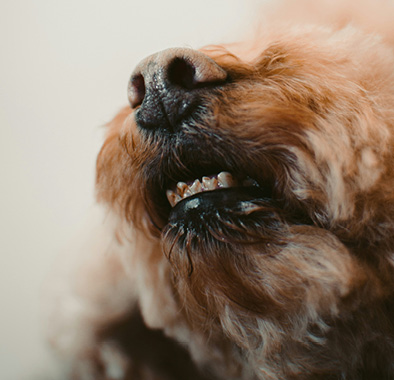
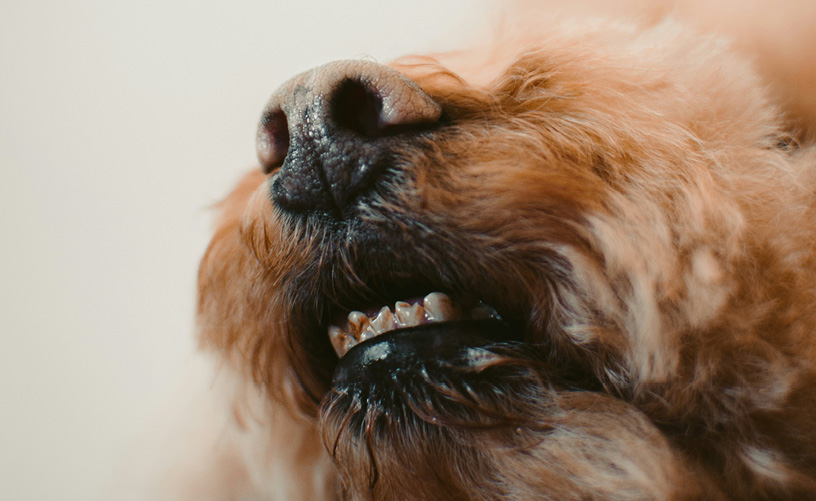
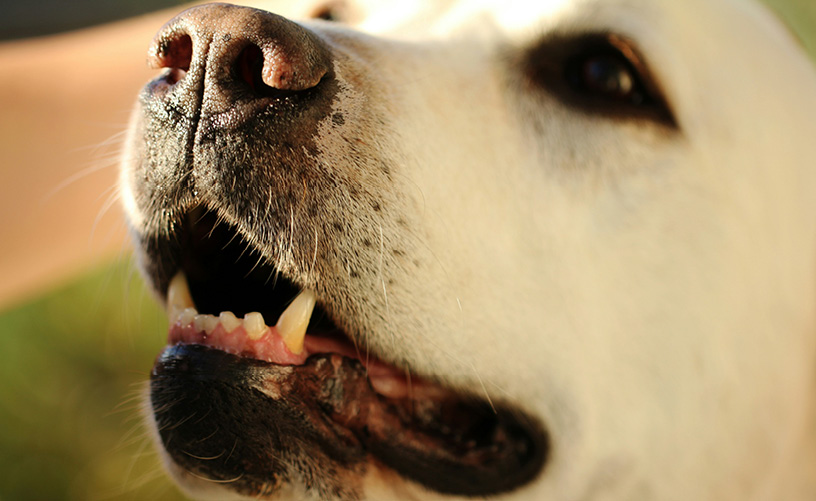
Many dental issues develop slowly, which means they often go unnoticed until later. A classic sign is brown buildup on the teeth: this is often visible tartar, especially on the outside of the teeth and around the molars. Red or swollen gums can also indicate inflammation.
Behaviour tells you a lot too. Some dogs chew less enthusiastically, leave toys lying around, or suddenly become more “picky” with food. In more serious cases, a dog may even eat less or turn away when you touch the mouth. This is often a sign that something is very painful or that there is pressure on a sensitive area.
Do you notice one or more signals, such as smelly breath, blood, red gums, visible buildup, or a dog that seems uncomfortable while chewing? Take it seriously. Especially in adult and older dogs, it is wise not to wait too long and to consult a vet if you’re unsure.

A clean dog starts with the mouth: the basics of oral hygiene
Keeping your dog clean is about more than coat and paws. The mouth is part of it too. With a simple routine, you can improve oral hygiene and reduce the risk of inflammation. Think of checking regularly, cleaning consistently, and acting in time if you notice changes.
Try to pick a fixed moment to check your dog’s mouth briefly and regularly: lift the lip, look at the teeth (especially the molars), and check the gums. The goal isn’t perfection, but early detection. If you spot plaque early, brushing can often prevent it from turning into tartar.
It’s important to know that chewing can help, but it doesn’t replace a proper dental routine. Plaque also forms in spots where chewing has little effect. That’s why a combination of checking, getting your dog used to being touched around the mouth, and gradually building up to tooth brushing is usually the most effective way to keep the mouth healthy.
Brushing your dog’s teeth: how to build it up without stress
Brushing works best when you introduce it slowly. Many dogs find it strange at first when you touch their mouth. That’s why success is all about gentle exposure and getting used to it: small steps, short moments, and stopping before your dog becomes overwhelmed.
Start, for example, by just lifting the lip and having a quick look. Reward calm behaviour. Then you can gently rub your finger along the teeth, especially the outside. Only when that goes well, introduce a toothbrush. The goal is for your dog to learn that this is “normal” and nothing to be stressed about.
When it comes to technique, you don’t need to scrub very hard. Soft but consistent brushing along the gumline is usually effective against plaque. Focus mainly on the outer surfaces of the teeth and molars; that’s where most debris collects and where tartar often forms. With regular brushing, you prevent small issues from turning into bigger dental problems.
The best dog toothpaste and special pastes: what to look for
Always use toothpaste that is specifically designed for dogs. Dog toothpaste is formulated differently from human toothpaste, because your dog will swallow it. A special toothpaste is therefore not a luxury extra, but simply part of the right products for safe oral care.
When choosing a toothpaste, pay attention to a few points: is it intended for dogs, is it gentle on the gums, and does the flavour suit your dog? If your dog dislikes the taste, it will be harder to get them to cooperate regularly. The aim is a routine that stays realistic, even for adult and older dogs.
If you notice signs like bleeding gums, clear pain responses, or a very strong smell coming from the mouth while brushing, stop and have things checked first to see whether there is already inflammation or another problem. Sometimes more is needed than home care alone, and a check-up with a vet is the safest next step.
Choosing a toothbrush for your dog’s teeth (and alternatives)
A suitable toothbrush makes brushing much easier. For most dogs, a small, soft brush works best, so you can follow the gumline without irritating the gums. With small breeds, a compact brush is handy; for larger dogs, a slightly longer handle can help you reach the back molars.
If your dog really struggles, you can temporarily start with a finger brush or a piece of gauze wrapped around your finger. This allows you to clean gently and helps your dog get used to the sensation in the mouth. It’s not a perfect long-term solution, but it can help you get over the first hurdle and get oral hygiene going.
Be careful not to scrub too hard. Too much pressure can make the gums sensitive, especially if there is already irritation or early inflammation. Gentle, short, and consistent brushing works better than long and intense sessions.
Chews, toys, and supplements: what really helps against tartar?
Chewing can support the natural cleaning of the teeth. As a chew rubs along the outer surfaces of the teeth, it can help reduce soft plaque and limit new buildup. Especially for dogs that love to chew, this can be a helpful addition to regular dental care.
It’s still important to stay realistic: chewing alone does not always prevent tartar, especially not in tricky spots around the back teeth and molars. Food debris tends to stay there, and those teeth often lag in terms of cleaning. That’s why you should combine chew time with a routine of checking and brushing.
When it comes to supplements, some owners notice a difference in breath or buildup, but they remain supportive tools. If there is already clear plaque and tartar or your dog is obviously uncomfortable, supplements won’t solve the problem. In that case, it’s wiser to get the basics right first: brushing, checking the gums, and going to the vet in time.
Mouthwash for fresher dog breath: when it helps (and when it doesn’t)
Mouthwash can temporarily freshen the mouth and reduce the number of bacteria. For some dogs, it’s a useful extra, especially while you’re still building up brushing and your dog is learning to accept it. It can contribute to a fresher feeling and sometimes to better breath.
However, mouthwash is no substitute for mechanical cleaning. If there is plaque or tartar on the teeth, you need to tackle that physically with brushing or, when it’s more advanced, by having the teeth cleaned by a vet. Mouthwash won’t remove the underlying cause.
Don’t use it if you see signs of inflamed gums, bleeding, or obvious pain. In those situations, extra stimulation in the mouth can actually make things worse. A vet check-up is then the more sensible option.
Removing plaque and tackling tartar: what you can do yourself
The difference between plaque and tartar is important. Plaque is soft and you can usually still influence it with brushing and good cleaning. Tartar is hard and firmly attached to the teeth. In most cases, you can’t remove it safely at home with brushing alone, certainly not without risking damage to the gums or enamel.
What you can do yourself: brush daily or a few times per week, check the mouth regularly, and pay attention to areas where tartar often starts (the outsides of the molars, the gumline, and sometimes the lower jaw). By doing this consistently, you limit buildup and prevent small deposits from turning into more serious dental issues.
Try not to “quickly scrape off” stubborn tartar if your dog resists or if you see blood. That can be very painful and worsen inflammation. When in doubt, have a vet assess the situation so your dog doesn’t experience unnecessary pain and the teeth are treated safely.
When to have your dog’s teeth cleaned by a vet
Sometimes home care isn’t enough. If you see significant tartar, your dog keeps having bad or foul-smelling breath despite brushing, or there are signs of gum disease, there is a good chance a professional dental cleaning is needed. This is especially true for older and adult dogs, because problems tend to build up over time.
During a thorough cleaning under anaesthesia, the vet can fully treat the mouth: remove tartar, clean the areas under the gumline, and address any sources of infection. When tartar is firmly attached, this is often the only way to do a truly complete job. The goal is not just a cleaner mouth but, above all, a healthy mouth without pain.
After the cleaning, it’s important to keep up the good work at home. Otherwise, new plaque and later new tartar will form. With a realistic routine of brushing, regular gum checks, and allowing your dog to get used to ongoing oral care, you can extend the benefits of the treatment.
Dental specialists and dental X-rays: when are they needed?
Sometimes a standard check-up is not enough. In cases of stubborn dental issues, recurring inflammation, or when your dog clearly has pain despite you seeing very little on the outside, a veterinary dental specialist may advise looking deeper. Many problems sit under the gums or around the roots of the teeth and molars.
In such situations, dental X-rays may be necessary. These images show what is happening in the jawbone and whether there are hidden infections, damage, or other dental problems. That makes it possible to treat more precisely and prevents ongoing discomfort or new issues.
The goal is always the same: a comfortable, healthy mouth with healthy teeth and, where possible, strong teeth for the long term. Especially if your dog has had issues for a while or if dental problems keep coming back, specialist dental care can sometimes be the best next step.
Checklist: effective cleaning for a healthy mouth and fresh breath
Would you like a simple routine you can stick to? Use this checklist for effective cleaning now and better dental health in the long run. Check your dog’s mouth and the outer surfaces of the teeth every week, build up brushing slowly (keep practising and get your dog used to it), and watch for signs such as brown buildup, bad breath, red or inflamed gums, and bleeding gums.If you notice visible tartar, pain, or recurring inflammation, professional cleaning is likely needed, and a visit to the vet (or a veterinary dental specialist) is the safest way to achieve a healthy mouth and fresh breath.

I’m Denise, the founder of Pawness. The company was born out of my love for my dog, Bo, and my search for fair, beautiful products for dogs. I believe that every choice matters: for your dog, for the planet, and for the people behind the products. Through these blogs, I help puppy parents make more conscious choices—without making it complicated.