You’re in the right place. Caring for dry dog paws is easier than it seems, and you don’t need complicated products to do it. In this article, you’ll learn why dogs’ paws are so vulnerable, how to recognize the signs of dryness, and what you can do to keep them soft and healthy.
This is for anyone who takes a mindful approach to their dog’s care. Whether you go on long walks through sand and over pavements, or take shorter trips around town, your dog’s paws deserve just as much attention as the rest of their coat. Many dog parents only notice something is wrong once their dog is already uncomfortable. With a bit of knowledge and a short routine, you can prevent it from getting that far.
Why do dog paws become dry?
A dog’s paw pads are designed to withstand all kinds of conditions. They absorb shock, provide grip on rough surfaces, and protect the joints with every step. But that also makes them vulnerable.
Extreme weather conditions are one of the main causes of dry dog paws. In summer, asphalt heats up incredibly fast. When the outside temperature is 30 degrees Celsius, hot asphalt can reach about 57 degrees Celsius. That’s far too hot for sensitive paw pads. In winter, road salt and snow can dry out and irritate the skin. Even clean sand at the beach can make the pads flaky when there’s prolonged contact.
Daily wear and tear also plays a part. A dog walks on almost every surface: from smooth tiles to cobblestones, from grass to gravel. All that variation takes its toll. Add dry indoor air in winter, and it’s easy to see why dry paw pads are so common.
Age is another factor. Older dogs often have drier skin tissue, including on their paws. Their skin recovers more slowly and more often needs extra support. The same goes for dogs with certain skin conditions or nutritional deficiencies. If you notice that your dog’s paws stay dry on a regular basis despite good care, it’s wise to consult a vet to rule out an underlying cause.
How do you recognise dry or cracked paw pads?
Dry paw pads aren’t always immediately visible. It often starts subtly: the pads feel rougher than usual, or you see slight flaking around the edges. Later on, small cracks may form, redness can appear, or the skin around the toes may feel tight and dry.
An important sign to watch for is excessive paw licking. If your dog keeps licking their paws, this may indicate irritation, discomfort, or even pain. It’s a natural reflex, but it often makes things worse. Saliva makes the skin even more sensitive and can further damage the pads.
Check the paws regularly, especially after a walk in very hot or very cold weather. Look carefully between the toes as well, because that’s where dirt tends to accumulate and cause extra irritation.
Dry dog paws: where do you start?
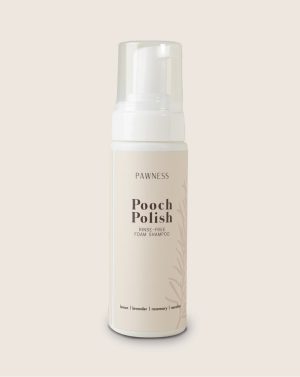
Good paw care starts with hygiene. So clean dry dog paws thoroughly after every walk. Dirt, road salt, small stones, and other irritants can collect in the folds around the pads and between the toes. For daily care, lukewarm water and a soft cloth are usually enough. If you don’t have water nearby, use Pooch Polish dry shampoo. This shampoo cleans the paws without water and effectively removes all dirt. Apply a small amount of foam to your hand, gently massage it into the paws, and then dry them with a towel.
Also pay attention to the hair between the pads. Keep it short by trimming it carefully. Hair that’s too long between the paw pads traps dirt, is pulled in with every step, and increases the risk of irritation. You don’t have to do this often, but do it when you notice the hair growing longer than the pads themselves.
After cleaning, a nourishing balm or ointment is the next logical step. Give the skin a chance to absorb the care by patting the paws dry before applying anything.
Natural ingredients that really work for dry dog paws
When caring for dry dog paws, it pays to choose products based on plant-derived ingredients. Not every human ingredient is suitable for dogs, so never use a regular hand cream or body lotion on your dog’s skin. They can contain substances that are not intended for animals.
Ingredients that have been shown to work well for dog paw pads include:
- Shea butter: provides intensive nourishment and helps repair dry spots. It’s one of the most commonly used natural ingredients in dog-friendly care products. It absorbs well without feeling sticky.
- Aloe vera: soothes the skin and relieves irritation. Especially when there is already mild redness, aloe vera works quickly and gently.
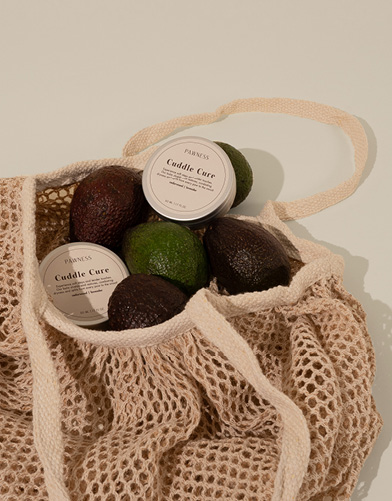
- Avocado oil: supports the skin barrier and keeps the pads supple. It has a light texture and contributes to long-term skin health.
- Coconut oil: is known for its hydrating properties. It’s popular in DIY recipes, but also in ready-made products.
- Olive oil: has a similar effect. Both oils are gentle, plant-based options that you can also use at home for a simple in-between treatment.
What to avoid when caring for dry dog paws
Not everything that seems “natural” is actually safe. Essential oils are a good example: some are toxic to dogs, even when applied externally. Always check whether an ingredient is dog-safe before using it.
It’s also best to avoid products that contain synthetic fragrances, parabens, or phthalates. Dogs lick their paws, and whatever is on the skin ends up inside their bodies. Choose products without harsh chemicals.
Socks can help as temporary protection, for example in snow or on hot surfaces, but they are no substitute for proper care. Many dogs never really get used to them, and wearing them for long periods without caring for the skin doesn’t solve the underlying problem.
If redness persists, cracks are severe, or your dog is limping, it’s best to see a vet. Good paw care prevents a lot, but not everything.
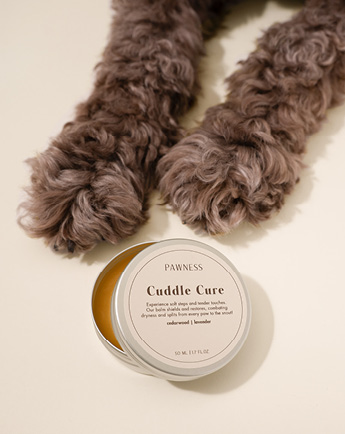
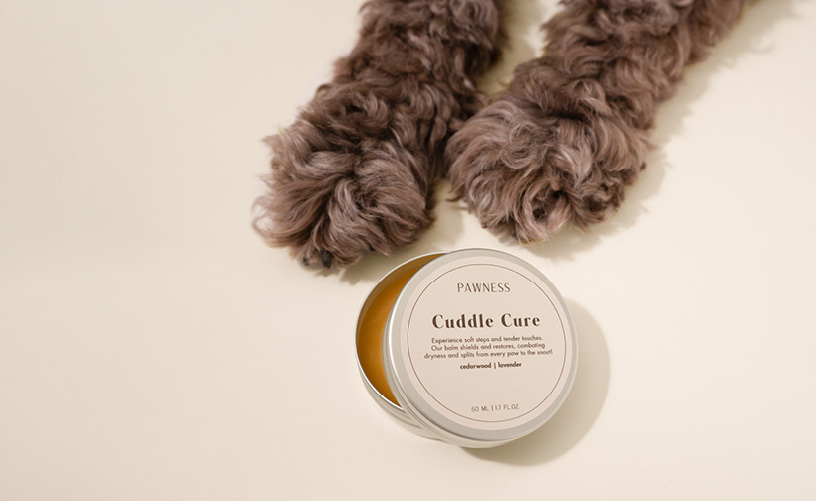
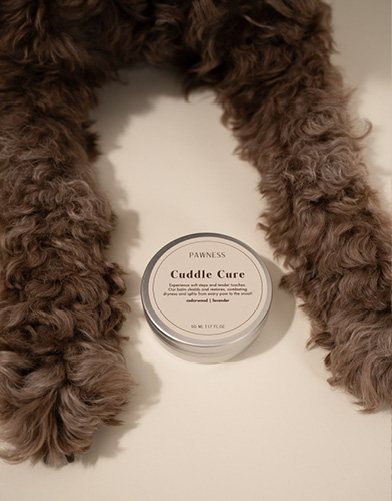
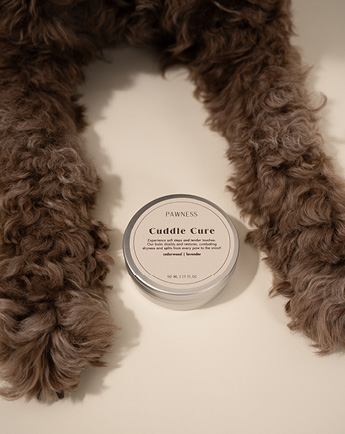
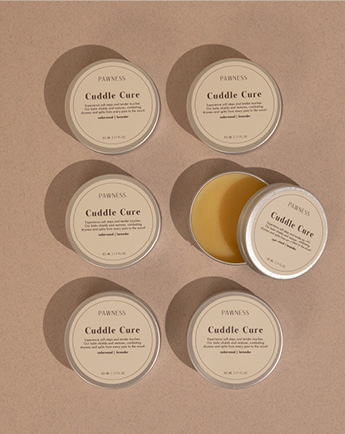
Cuddle Cure: a special paw balm for daily use
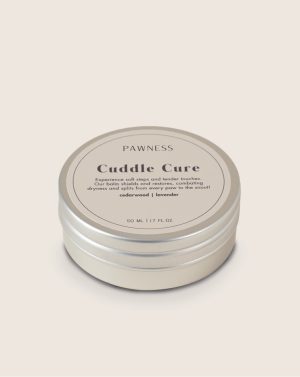
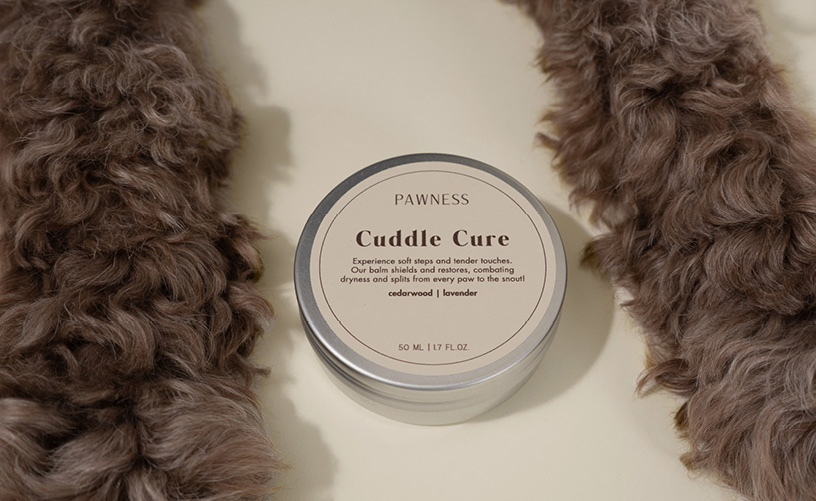
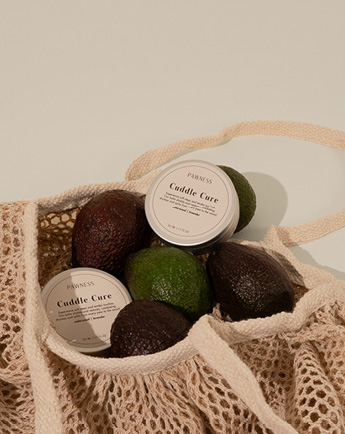
If you want to care for dry dog paws in a simple, everyday way, the Cuddle Cure paw and nose balm from Pawness is a conscious choice. The balm is made with plant-based ingredients such as shea butter, aloe vera, avocado oil, and apricot kernel oil. That last one gives a soft, hydrating finish without a sticky feel.
This special paw balm is 100 per cent natural, vegan, palm oil–free, and free from parabens, sulfates, and synthetic colourants. That makes it suitable for sensitive dogs and for pups from 12 weeks of age. The scent of lavender and cedarwood is calm and not overpowering.
Here’s how to use it: warm a small amount of balm between your fingers and gently massage it into the paws and, if needed, the nose. It’s perfect after a walk, before bedtime, or whenever the skin feels dry. Testing it on a small patch of skin first is always a good idea.
The balm is not a miracle cure, but as part of a consistent care routine, you’ll notice the difference. Soft, supple paw pads start with attention and the right ingredients.
A simple daily routine for healthy paws
The best care is the care you can stick with. You don’t need an elaborate ritual. Just a few minutes a day are enough to keep your loyal companion’s paws in good condition.
After every walk, wipe the paws clean with a damp cloth. Check for small stones, twigs, or clumps of road salt between the pads. Dry the paws thoroughly, especially between the toes. This hardly takes a minute, but it makes a noticeable difference in the long run.
Apply a little balm once or twice a week, more often when conditions call for it. In very hot or very cold weather, or after long walks on hard surfaces, daily use is perfectly fine. Many dogs relax during this moment. It’s a calm, gentle routine that helps build trust between you and your dog, especially if you start early.
Keep the nails trimmed, as nails that are too long change the way a dog distributes their weight and increase the pressure on the pads. Regularly check that the hair between the paw pads isn’t getting too long.
Caring for dry dog paws doesn’t require a big effort. It requires attention, consistency, and products that are truly suitable for dogs.
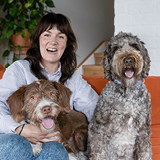
I’m Denise, the founder of Pawness. The company was born out of my love for my dog, Bo, and my search for fair, beautiful products for dogs. I believe that every choice matters: for your dog, for the planet, and for the people behind the products. Through these blogs, I help puppy parents make more conscious choices—without making it complicated.