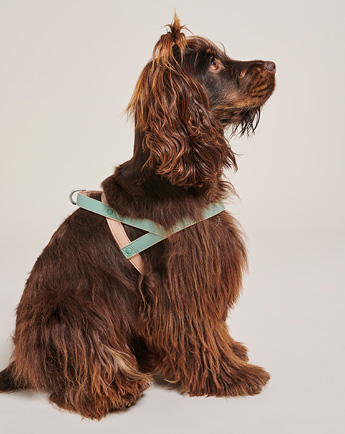
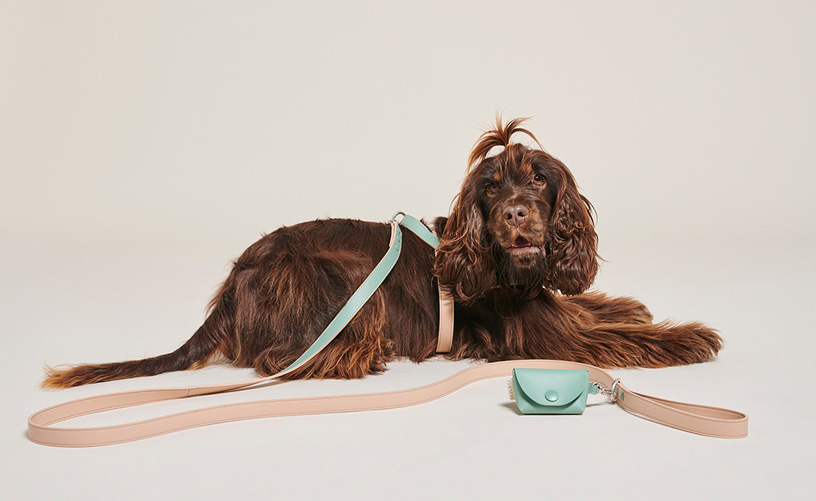
You’re standing there with a brand-new dog harness in your hands, your dog is looking at you expectantly, and you think: “How do I actually fit a dog harness?” Don’t worry! We’ll guide you through the wonderful world of harnesses, straps, and buckles. Because let’s be honest: a well-fitting harness is the difference between a lovely walk and a frustrating tug-of-war.
Why is a well-fitting dog harness so important?
A good harness is just as important as a good pair of shoes for yourself. Imagine having to walk all day in sneakers that are too tight – not exactly comfortable, right? The same goes for your four-legged friend. A harness that doesn’t fit properly can rub, pinch, and cause your dog discomfort while walking.
But there’s more. A dog harness that fits perfectly ensures the pressure is evenly distributed across your dog’s chest and back. This is much more comfortable than a collar, which puts all the pressure on the sensitive neck area. Especially if your dog pulls on the leash, this makes a world of difference.
The difference between a collar and a harness
Many dog lovers wonder: why should I choose a harness instead of a collar? The answer is simple: safety and comfort. A collar puts pressure on your dog’s neck, which, in a pulling dog, can lead to neck problems or even trachea issues.
A good harness, on the other hand, distributes the pressure evenly across the chest and shoulders. This means your dog can walk safely and comfortably, even if they get a bit enthusiastic on the leash now and then. For dogs with a sensitive back or neck issues, a harness is often the best choice.
Different types of harnesses: which style suits your dog?
Before we explain how to fit a dog harness, it’s useful to know which different types of harnesses exist. Because not every type of harness is suitable for every dog. Most dogs do well with a standard chest harness, but there are more options.
The Y-harness: the popular choice
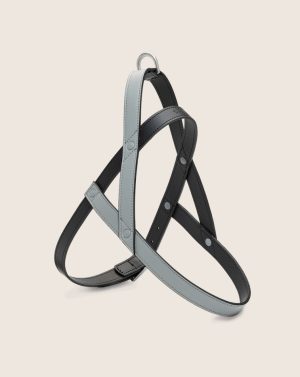
The Y-harness is one of the most popular types of harnesses. The name comes from its shape: if you look at the harness from above, you’ll see a Y. This type of harness is specifically designed to keep your dog’s shoulders free so they can move easily. A Y-harness doesn’t restrict natural movement and is therefore ideal for active dogs.
The front of a Y-harness sits between the front legs, with a vertical strap running over the chest. This ensures that the pressure is distributed evenly and that your dog can move comfortably without the harness shifting. For most dogs, this is the best all-round harness.
The H-harness: the classic option
An H-harness has two horizontal straps: one around your dog’s chest and one around the midsection. Two vertical straps over the back connect these. It looks like the letter H – hence the name. This type of harness is easy to put on and suits many different breeds.
Do keep in mind: an H-harness can sometimes run over the shoulders, which may limit your dog’s range of motion. For dogs that move or exercise a lot, a Y-harness is often a better option.
The no-pull harness: for enthusiastic pullers
Does your dog tend to pull as if they’re towing a sledge? Then a no-pull harness might be a good fit for you. This specially designed harness often has an attachment point on the front, at the chest. When your dog pulls, they automatically turn slightly towards you, which makes pulling less rewarding.
A no-pull harness is not a miracle cure – training remains essential – but it can certainly help with a dog that likes to pull. Be patient and combine the harness with positive training for the best results.
How to fit a dog harness: preparation
Okay, you’ve chosen the perfect harness. Now comes the exciting part: how do you actually fit a dog harness? No need to panic! With the right preparation, it’s a breeze.
Step 1: Make sure your dog is calm
Before you start, make sure your dog is calm and relaxed. A dog that is anxious or overly excited will make it much more difficult to adjust the harness. Take a moment to help your four-legged friend settle. A few treats can work wonders!
Step 2: Lay out the harness
Place the harness on the floor and take a good look at it. Which side is the front? Where are the buckles? Which straps are adjustable? By studying the harness first, you’ll know exactly what to do next. This makes the process much easier for both you and your dog.
Step 3: Open all buckles and loosen the straps
Unfasten all the buckles and make sure the straps are wide enough. It’s much easier to put a loose harness on and then tighten it than to try and squeeze your dog into a harness that’s already too tight. Your dog will thank you for it!
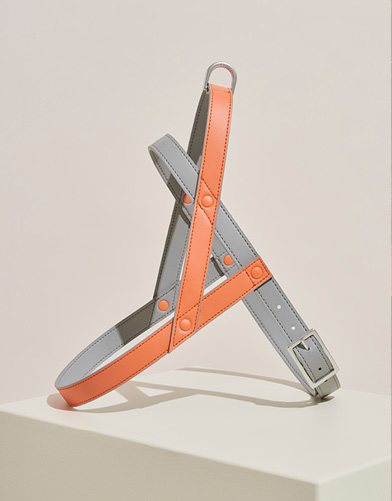
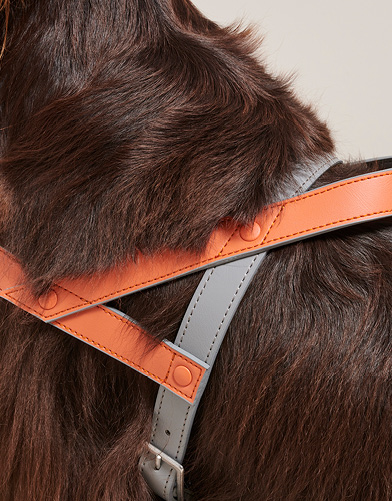
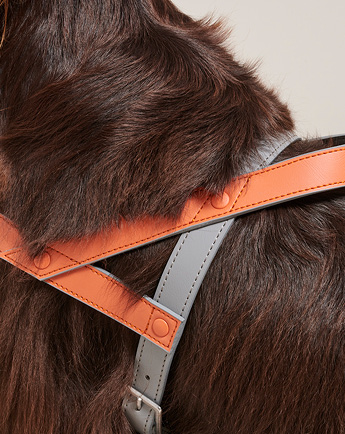
Vegan Leren Tuigje Bo – Koraal
How to fit a dog harness: step by step
Now comes the moment you’ve been waiting for: actually putting the harness on and adjusting it. We’ll walk you through the process step by step.
Putting on a Y-harness
A Y-harness usually goes over your dog’s head. Here’s how to do it:
- Hold the harness open with the front facing you
- Let your dog put their head through the neck opening
- Pull the harness over the head until the chest strap sits nicely in place
- Take the straps that go under the belly and fasten them on the side or on the back
- Check that everything is positioned correctly before clipping the buckles closed
If your dog is nervous about putting their head through the harness, let them get used to it first. Leave the harness on the floor at home for a few days, let your dog sniff it, and give treats near the harness. This way they’ll associate it with something positive.
Putting on an H-harness
An H-harness often works a little differently. Many H-harnesses can be opened up, so your dog doesn’t have to put their head through it. This is ideal for dogs that don’t like things going over their head.
- Lay the harness over your dog’s back
- Fasten the chest strap under the chest
- Fasten the belly strap behind the front legs
- Check that both straps sit correctly and are not twisted
- Adjust the straps for the perfect fit
The right fit: how do you know if the harness fits well?
You’ve put the harness on, but how do you know if it fits properly? These are the most important checkpoints for the perfect fit.
The two-finger rule
This is the golden rule when fitting a dog harness: you should be able to slide two fingers between the harness and your dog’s body—no more, no less. If the harness is too tight, it can rub and feel uncomfortable. If it’s too loose, your dog may escape from it, or the harness may shift while walking.
Check this in several places: the neck, the chest, and the belly strap. You should be able to comfortably fit two fingers between your dog and the harness at every point.
Check the range of motion
Let your dog walk around a little with the harness on. Watch how they move. Do they walk normally, or do you notice they’re moving differently than usual? A good harness should not restrict the movement of the shoulders and front legs.
If you see straps rubbing over the shoulders or notice your dog having trouble walking, the harness is not fitted correctly. Adjust the straps or consider a different harness style. Your dog’s freedom of movement is crucial for comfort.
Check the position of the chest strap
The chest strap should sit nicely on the chest, not in your dog’s armpits. If the strap is too far back, it can rub against the front legs. If it’s too far forward, it can put pressure on the throat. The perfect position is just behind the front legs, where the breastbone starts.
Check the back strap
The strap along the back should lie flat and not be twisted. It should be snug enough not to shift, but not so tight that it becomes uncomfortable. The leash usually attaches to a D-ring on the back. Check that this ring sits in the right place – typically between the shoulder blades.
Common mistakes when fitting a dog harness
Even with the best instructions, things can still go wrong. These are the most common mistakes and how to avoid them.
Mistake 1: The harness is too tight
A harness that’s too tight is not only uncomfortable but also dangerous. Straps that are too tight can restrict your dog’s breathing and cause chafing. If your dog seems uncomfortable, pants heavily, or tries to get the harness off, it’s probably too tight.
The solution? Loosen all the straps by one hole and check again using the two-finger rule. It’s better to start a bit loose and then fine-tune than to leave the harness too tight.
Mistake 2: The harness is too loose
On the other hand, a harness that’s too loose can also cause problems. Your dog can slip out of it, especially if they walk behind you or suddenly get scared. A loose harness can also shift around while walking, which is annoying and uncomfortable.
If you can fit more than two fingers between your dog and the harness, or if the harness shifts when your dog moves, it’s too loose. Time to tighten those straps!
Mistake 3: Twisted straps
This is a classic mistake that’s easy to make, especially with a new harness. Twisted straps can rub, preventing the harness from sitting correctly. Before putting the harness on, check that all straps lie flat and are not twisted.
Once the harness is on, check all the straps again. Straighten them where needed. Your dog will definitely notice the difference!
Mistake 4: Choosing the wrong size
Even the best harness won’t help if it’s the wrong size. Too many people guess their dog’s size, but every dog is unique. A 30-kilo Labrador can have a very different chest circumference than another Labrador of the same weight.
The solution? Always measure your dog before buying a harness. Measure the chest circumference (the widest part of the chest, just behind the front legs) and compare it with the harness’s size chart. If you’re in doubt between two sizes, choose the larger one – you can always adjust it.
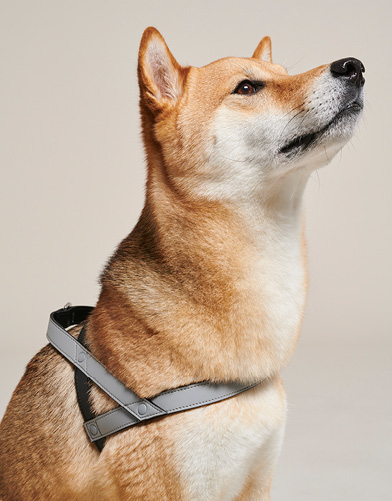
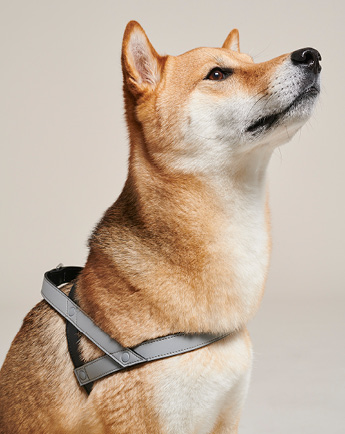
The importance of the right size: measuring for the perfect harness
We’ve already mentioned how important the right size is, but let’s dive a bit deeper. The right size determines whether your dog walks comfortably, safely, and happily.
How to measure chest circumference
The chest circumference is the most important measurement for a dog harness. Measure the widest part of your dog’s chest, just behind the front legs. Use a flexible measuring tape and make sure it’s not too tight, but still snug against the coat.
Let your dog stand calmly while you measure. If they move or sit down, you won’t get an accurate measurement. A treat can help them stay still! Write down the size in centimetres and compare it with the harness size chart for the one you want.
How to measure neck circumference
Some harnesses also require the neck measurement. Measure around the widest part of the neck, just above the shoulders. Again, not too tight, but nicely fitted. You should be able to fit two fingers between the tape measure and your dog’s neck.
Neck circumference is especially important for harnesses that go over the head. If the neck opening is too small, you won’t get the harness over your dog’s head. If it’s too big, the harness can shift, or your dog might even slip out of it.
How to measure back length
Back length is used less often, but it can be helpful when choosing the right harness. Measure from the base of the neck (where the collar normally sits) to the start of the tail. This helps you determine whether the harness is too long or too short for your dog.
A harness that’s too long can be annoying and get in the way. A harness that’s too short can put too much pressure on certain areas of the body. Back length helps you choose the most suitable model.
Tips for dogs that don’t like wearing a harness
Some dogs don’t like wearing a harness at first. Maybe they’re not used to it, or they’ve had a bad experience. Here are some tips to help your dog get used to their new harness.
Make it a positive experience
Association is everything! Let your dog calmly explore and sniff the harness. Give treats while they’re near it. Put the harness on, immediately give a reward, then take it off again. Repeat this a few times a day.
Build it up slowly. On day one, you might keep the harness on for just a few seconds. The next step is a minute. Then five minutes, and so on. Before you know it, your dog won’t mind the harness at all.
Be patient with an anxious dog
If your dog is anxious, don’t force anything. A dog that’s scared of the harness can become stressed, which only makes things worse. Take your time and let your dog set the pace.
Use lots of positive reinforcement. Every small step forward deserves a reward. If your dog stays very anxious, consider asking a dog trainer or behaviourist for help. A professional can often give that extra bit of guidance that makes all the difference.
Practice in a calm environment
Don’t put the harness on for the first time right before a walk. Your dog might then associate the harness with going outside, making them so excited they can’t stand still. First practice at home, in a calm environment without distractions.
Once your dog is comfortable putting on the harness and walking around in it, you can move to the next step: a short walk in the garden or around the block. Slowly build up to longer walks
Taking care of your dog harness: how to keep it looking great for longer
A good dog harness is an investment, so you want it to last. With the right care, your harness will stay beautiful and functional for years.
Clean it regularly
Harnesses can get dirty, especially if your dog loves mud or swimming. Wash the harness regularly according to the manufacturer’s instructions. Most harnesses can be hand-washed with a mild detergent.
Be careful with the washing machine: some harnesses are machine-washable, others are not. Always check the label. If you do put it in the machine, use a laundry bag to protect the buckles and straps.
Check for wear and tear
Regularly check the harness for signs of wear. Look at the straps: are they frayed or worn? Check the buckles: do they still close properly? Inspect the stitching: is everything still firmly in place?
If you see signs of wear, it’s time to replace the harness. A worn harness can break unexpectedly during a walk, which can be dangerous. Safety always comes first!
Store the harness properly
When you’re not using the harness, store it in a dry place. Hang it up or lay it flat so the straps don’t lose their shape. Avoid direct sunlight, as this can damage the material over time.
Extra features: GPS tracker and other handy details
Modern harnesses can do more than just keep your dog safe. Many come with extra features that make life easier.
A GPS tracker for extra safety
Some harnesses have a special pocket or attachment point for a GPS tracker. This is ideal if your dog tends to wander off or if you simply want extra peace of mind. With a GPS tracker, you always know where your dog is.
Do keep in mind: a GPS tracker adds extra weight to the harness. For small dogs, this can be too much. Always check whether the weight is suitable for your dog.
Reflective details for visibility
Do you often walk in the dark? Then reflective details on the harness are a must. They make your dog more visible to drivers and cyclists. Some harnesses have built-in reflective strips, others have a special loop or pocket for an LED light.
Safety during night-time walks is crucial. Even if your harness doesn’t have reflective details, you can always add a reflective band or light.
Handle on the back
Many harnesses have a handle on the back. This is super handy in all kinds of situations: you can quickly grab your dog if needed, help them over an obstacle, or support them if they’re older and have trouble with stairs.
A handle is especially useful for larger dogs. It’s less common on small-dog harnesses, but can still be a nice extra.
Pawness harnesses: stylish, sustainable, and comfortable
Now that you know everything about how to fit a dog harness, it’s time to talk about the harnesses from Pawness. Because a harness doesn’t just have to be functional – it can be beautiful too!
The Trix harness: handcrafted with love
The Trix dog harness is made from recycled polyester and vegan leather. That means you’re choosing comfort for your four-legged friend and doing something good for the planet at the same time. The harness is handcrafted in Italy, resulting in exceptional quality and fit.
The Trix harness is a Y-harness, which means it keeps your dog’s shoulders free and doesn’t restrict movement. Perfect for active dogs that love to run and play! The straps are adjustable so you can create the perfect fit for your dog.
The Bo harness: timeless elegance
The Bo dog harness is made from Pawness’s signature vegan leather. This harness exudes timeless elegance and is perfect for dogs (and their humans!) who love style. The vegan leather is not only beautiful, but also durable and animal-friendly.
Just like the Trix harness, the Bo harness is designed with comfort in mind. The pressure is evenly distributed across the chest and back, so your dog can walk comfortably. The adjustable straps ensure the harness fits dogs of different sizes.
Sustainability first
At Pawness, sustainability comes first. All harnesses are made from eco-friendly, non-toxic, cruelty-free materials. By choosing a Pawness harness, you’re not only doing something good for your dog, but also for the future of our planet.
The harnesses are built to last. With proper care, your Pawness harness will stay beautiful and functional for years. That’s good for your wallet and for the environment.
Frequently asked questions about fitting a dog harness
Let’s wrap up with answers to the most frequently asked questions about dog harnesses.
How often should I check the fit?
Check the fit regularly, especially with young dogs that are still growing. Adult dogs can also gain or lose weight, which affects the fit. Check the harness at least once a month and adjust where needed.
Can my dog wear a harness all day?
It’s better to take the harness off when you’re not walking. This gives your dog’s skin room to breathe and helps prevent irritation. Some dogs can wear a harness all day without any issues, but it’s not necessary and usually not recommended.
What if my dog is between two sizes?
If your dog falls between two sizes, always choose the larger one. You can adjust a harness that’s a bit too large, but you can’t make a too-small harness bigger. You’ll get the best fit with a slightly roomier harness that you can tailor with the adjustable straps.
How long does it take for my dog to get used to the harness?
That depends on the dog. Some dogs accept a harness right away, while others need a few days or even weeks. Be patient and use plenty of positive reinforcement. Most dogs eventually get used to their harness and even grow to love it, because it means one thing: walk time!
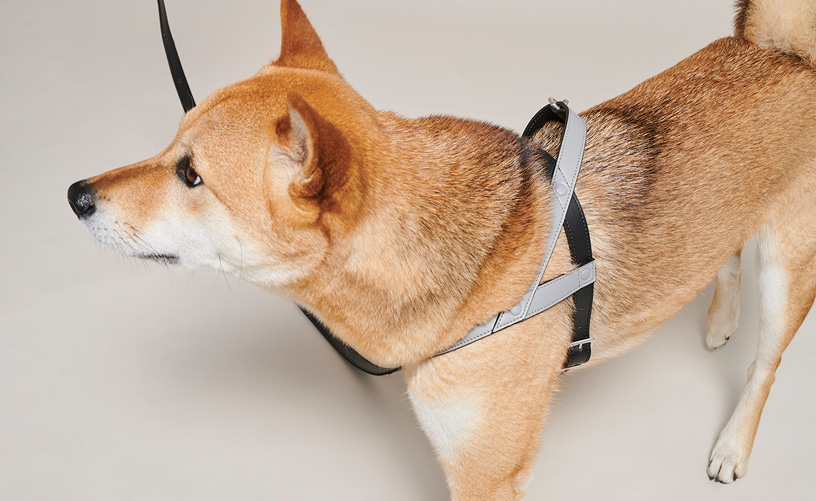
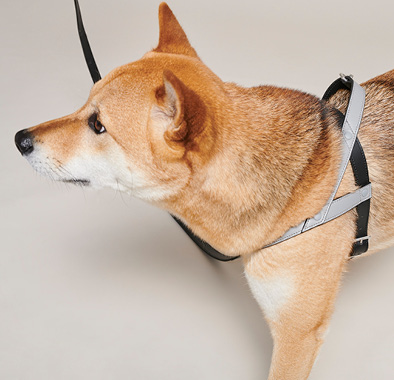
Vegan Leren Tuigje Bo – Emerald
Ready for the perfect walk!
Now you know everything about how to fit a dog harness. From choosing the right type to adjusting the perfect fit, you’re all set to take your dog out on safe and comfortable adventures.
Remember: a well-fitting harness makes walks so much more enjoyable for both you and your dog. The pressure is evenly distributed, your dog has full freedom of movement, and you can enjoy every walk together without any hassle.
Whether you go for the stylish Trix harness or the elegant Bo harness from Pawness, with the tips in this guide you’ll know exactly how to adjust the harness for the best possible fit. So what are you waiting for? Put that harness on, grab the leash, and head out with your loyal companion. Your next adventure is waiting!
I’m Denise, the founder of Pawness. The company was born out of my love for my dog, Bo, and my search for fair, beautiful products for dogs. I believe that every choice matters: for your dog, for the planet, and for the people behind the products. Through these blogs, I help puppy parents make more conscious choices—without making it complicated.