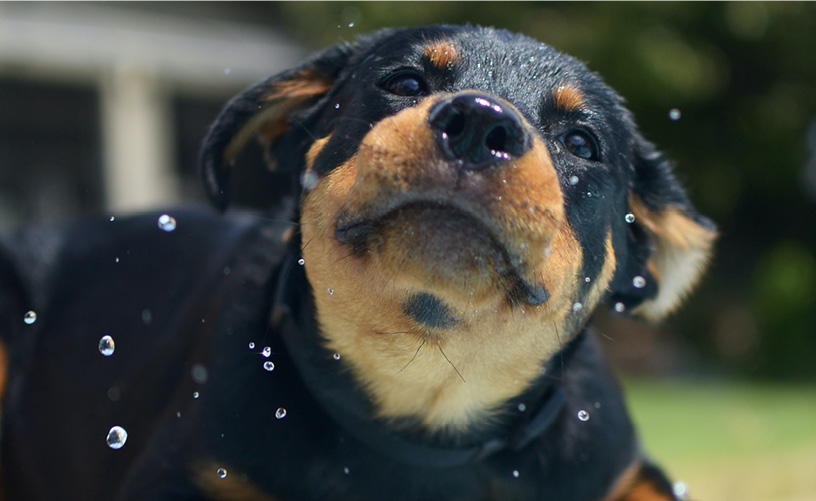
Some dogs want nothing to do with it, while others just can’t get enough: swimming. On a warm day, there’s almost nothing better than watching your dog happily splash around in the water. What many people don’t realise, though, is that puppies – just like children – also need to learn how to swim. Luckily, teaching your puppy to swim isn’t difficult at all. We’ve put together four easy steps to help your pup get used to water and eventually become a confident swimmer. Start early, so you can fully enjoy fun water adventures together once summer arrives!
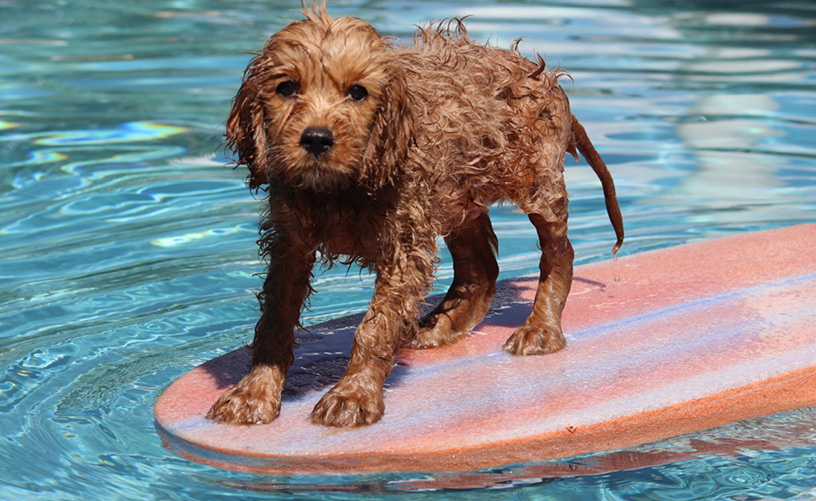
Photo by Mia Anderson on Unsplash
Table of Contents
Puppy swimming: swim lessons in 4 steps
- Step 1. Get to know water
- Step 2. Walk and play in the water
- Step 3. Into the water
- Step 4. Swimming on their own
Water fun with your dog: extra tips
- Teach your dog to fetch
- Bring an older dog along
- Avoid your puppy getting too cold while learning to swim
- Teach your puppy to swim with a harness
- Teach a cue
- Pay attention to where you go swimming
- Choose the right moment
- Keep an eye on your puppy while swimming
Why does a dog need to learn to swim?
Almost every dog can splash around a bit in the water, but not all of them naturally use the right swimming technique. If a puppy doesn’t learn to swim properly before the age of four months, there’s a good chance they’ll never really pick it up. These dogs might still go into the water, but usually prefer to feel the bottom under their paws. When they do actually swim, they often use the wrong technique and slowly start to sink. They splash a lot with their front paws and let their rear end drop, causing them to tilt more and more in the water. If this goes on for too long, your dog could even drown. When you teach your pup to swim, they’ll go into the water feeling confident and safe. On top of that, regular swimming helps puppies build strong muscles. And honestly, what’s better than watching your dog leap off the shore and splash into the water?
Can every dog swim?
In theory, every dog can learn to swim, but for some dogs it’s not wise or safe to let them do so. Some dogs simply don’t enjoy water at all, or even find it a bit scary. Don’t force these dogs to swim by throwing them into the water, for example – that will only create more stress. These dogs also often don’t develop the right technique. Some dogs react poorly to water: they might develop ear problems, diarrhoea, or even vomit.
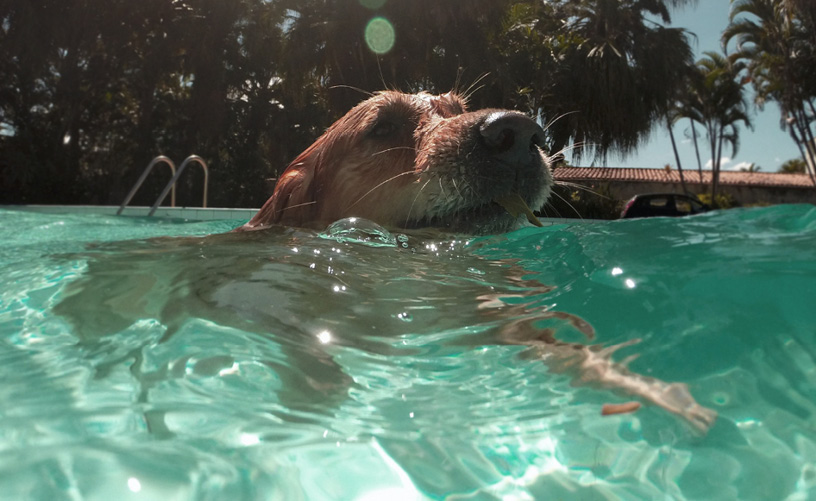
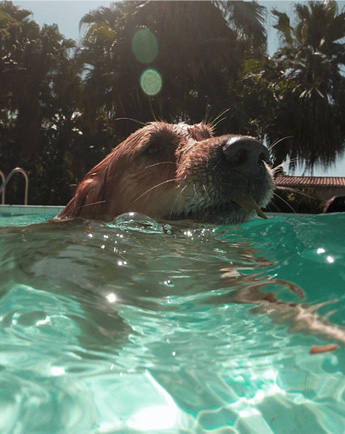
Photo by Linoleum Magazine on Unsplash
Certain breeds really shouldn’t swim because their body shape just isn’t suited for it. This is especially true for dogs with very flat faces, such as pugs and English bulldogs. Be careful with overweight dogs as well (especially those with short legs), because it’s very tiring for them to keep themselves afloat. Dogs with very thick coats that soak up water (like Schapendoes) may also struggle to stay buoyant. A dog life jacket can be a great solution for these dogs. Finally, it’s smart to pay extra attention to dogs that absolutely love water (like many labradors) but were never taught to swim properly. They’re more likely to swim farther or longer than is sensible and can go under due to poor technique. Teaching your puppy to swim is therefore really important.
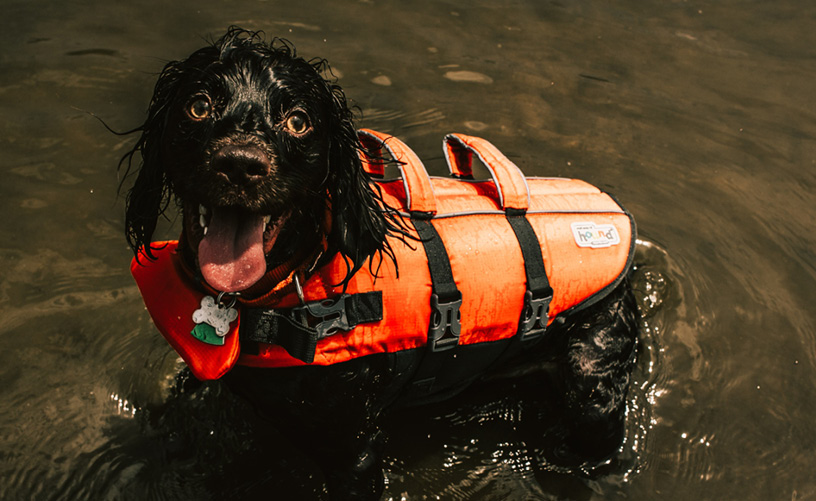
Photo by isaac jarnagin on Unsplash
Puppy swimming: swim lessons in 4 steps
Step 1. Get to know water
We want to teach a puppy to swim so they don’t become afraid of water and can swim safely and confidently later on. The first step is to introduce your new little friend to this strange, wet stuff. Start this water training as soon as your pup has had their first vaccinations (around 12 weeks). A big advantage of this period is that your puppy is still in their socialisation phase and tends to find most new things fun. We’ll make use of the fact that puppies at this age usually follow their humans everywhere (if all goes well). Start with a small puddle on the street and let your pup follow you through it. Wet paws are enough! One puppy will love this right away, another might need a bit more encouragement. Always bring plenty of treats to reward your little rascal.
Step 2. Walk and play in the water
Is your pup no longer afraid to get their paws wet? Great. Now head to an area where you know there are deeper puddles, for example, a forest path after a rain shower, and continue the training there. Walk straight through the deeper puddles as if it’s the most normal thing in the world. If your puppy follows you on their own, perfect. If they try to avoid the water, tempt them with a treat or a toy. Most puppies are always up for some roughhousing or a little fetch game in the water. Keep in mind: your pup will get dirty and wet here, so bring a towel and avoid doing this on very cold days.
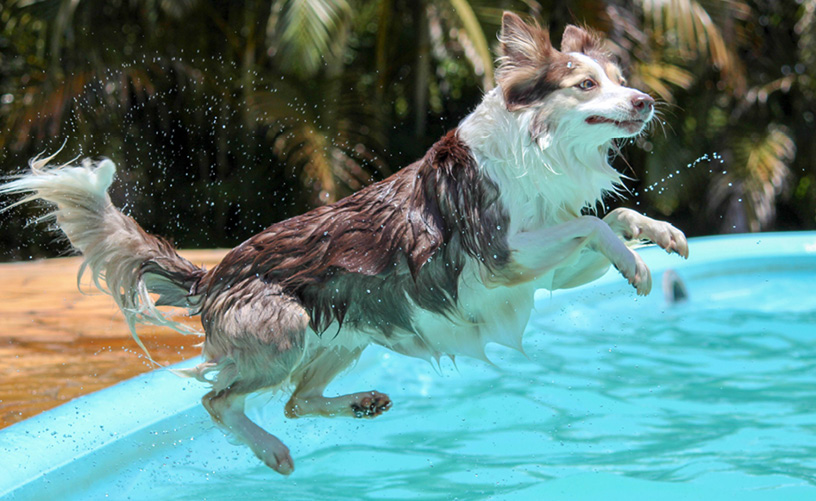
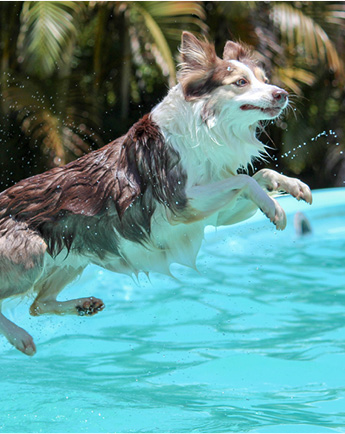
Photo by Murilo Viviani on Unsplash
Step 3. Into the water
Once your puppy runs into a deep puddle without hesitation, it’s time for the real work: teaching your puppy to swim. Choose a warm day, because the idea is that you’ll go into the water as well. For this step, pick a small lake or similar spot where both people and dogs are allowed to swim. Ideally, the water has a gently sloping bottom so your puppy can still feel the ground under their paws at first. If your puppy finds this water a bit scary, visit a few times and just play in the shallow area before you move on.
If your pup is comfortable in the water, you can start helping them swim: place both hands under your little dog’s body and support them. Walk to the deeper part where your puppy can no longer stand and slowly lower your hands. Your pup will now lie straight in the water and “walk” towards the shallower part. This is the correct swimming technique. If your puppy’s back end starts to sink, support them again so they lie straight in the water. Repeat this a few times and reward your puppy enthusiastically. If you can’t, mustn’t, or don’t want to go into the water yourself, you can also buy a swim vest for your pup to help keep them horizontal in the water. Just make sure you let them get used to wearing it at home first.
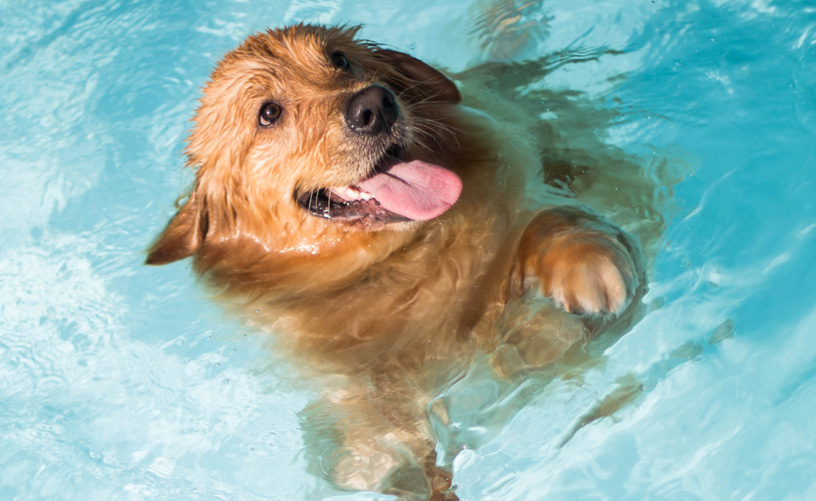
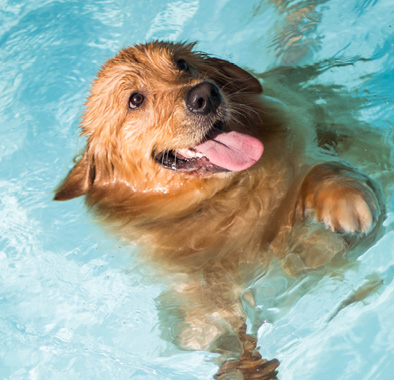
Photo by Marcia Soligo on Unsplash
Step 4. Swimming on their own
Once your pup consistently uses the right swimming technique (see step 3), it’s important to practice actual swimming in open water. For this stage, it’s essential to choose water with a gently sloping bottom. Walk into the water yourself towards the deeper part and ask your puppy to follow you. Don’t go too far. The first time, let your pup swim just about a meter at most. Many puppies will find it a bit scary when the ground suddenly disappears beneath their paws. Swimming back towards the shore is easier than swimming away from it, so always let them swim back to solid ground. Build this up slowly until your little rascal can swim around safely and confidently. Only then is it a good idea to let your puppy swim in places where the bottom is steep or less gradually sloping.
Treat your dog to a nice bath after swimming using Houndztooth’s natural, luxury grooming products, and brush their coat thoroughly.

Water fun with your dog: extra tips
Teach your dog to fetch
Teach your dog to fetch on land first. Once your pup understands (and enjoys) the game, you can start fetching in the water too. Instead of having you do the swimming in step 4, you can have your puppy fetch toys from the water as part of the training. It’s also a great game for the summer months.
Photo by Illumination Marketing on Unsplash
Bring an older dog along
If your puppy keeps finding one of the steps a bit scary, take a calm, older dog who loves swimming with you. A good example works wonders. A pup who’s nervous about leaving the shore or about “really” swimming will often be more willing to do it after seeing another dog go first. A bonus for step 4: if they follow that dog into the water, you don’t have to go in yourself (unless you want to, of course). Just make sure the older dog doesn’t swim too far out with your inexperienced puppy in tow.
Avoid your puppy getting too cold while learning to swim
Do you need to teach your puppy to swim when it’s still cold outside, for example because you got them in autumn or winter? Then always keep the practice sessions short and bring a towel. Puppies cool down faster than adult dogs.
Teach your puppy to swim with a harness
Teach your puppy to swim while wearing a harness so you can easily pull them up out of the water or guide them to shore if needed.
Teach a cue
Don’t want your dog to dive into the water at any time, anywhere? Then start teaching a cue for going into the water right from step four. This is especially important if your dog really loves water and happily jumps off steep banks (like dikes). In those situations, your dog can’t always get out of the water on their own, so you need to know exactly when and where they’re swimming.
If you don’t want your puppy to learn to race through every puddle, only let them go through puddles on cue (like “follow”) in steps 1 and 2, and reward them when they don’t go through the puddle if you don’t either. Make sure you’ve taught this cue properly beforehand.
Teach your puppy to swim in the right conditions
Don’t let your puppy get completely soaked on very cold days, as their muscles can cramp up. Also avoid letting your dog jump into ice-cold water on hot days, because their body will start holding on to heat, which can lead to overheating.
Pay attention to where you go swimming
In summer, keep an eye out for algae. After a few warm days, lakes can still be full of them, which may cause your dog to develop itchy skin. Blue-green algae are just as dangerous for dogs as they are for humans, so when it’s hot, always look for flowing water instead.
Also watch out in areas where people fish, and check for fish hooks, trash, or dead animals around the water.
The beach is a fantastic place to go with your dog – running on the sand and chasing the waves. But keep a close eye on your pup if they decide to swim. The (under)current can be very strong. Be extra careful when playing fetch in the sea: because of wind and current, a ball can suddenly drift very far away while your dog keeps swimming after it. Always bring fresh drinking water so your dog doesn’t start drinking seawater when they get thirsty.
Choose the right moment
Don’t let your puppy swim when they are already tired or having an off day. Swimming is physically demanding, especially for young and senior dogs.
Keep an eye on your puppy while swimming
Always keep watching your dog. Just like people, dogs can suddenly get a cramp, especially after you’ve been throwing balls or toys for a while.
Never just throw your dog into the water from the shore, even if they already swim reasonably well. This can be very traumatic.
Sources: “Teaching a Puppy to Swim in 4 Steps | With Tips & Explanations”
– Honden aan boord, van Trudie Rutten
Written by: Jori Noordenbos

I’m Denise, the founder of Pawness. The company was born out of my love for my dog, Bo, and my search for fair, beautiful products for dogs. I believe that every choice matters: for your dog, for the planet, and for the people behind the products. Through these blogs, I help puppy parents make more conscious choices—without making it complicated.