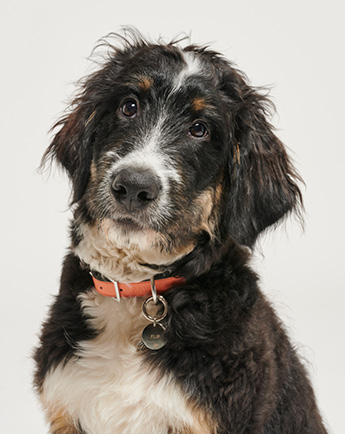
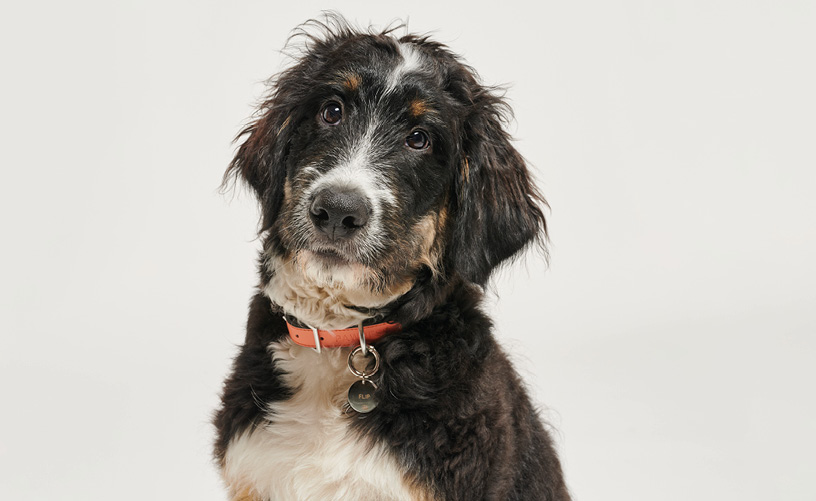
Yes! It’s finally time to bring your new puppy home. As soon as your new pup arrives, it’s a good idea to start with puppy training right away. It’s important to teach your little rascal some basic skills. Good puppy training supports your dog’s socialisation and good behaviour. It also helps you build a strong bond together. It gives you both time to get used to each other and to learn how to work as a team. And on top of that, it’s super fun to train with your puppy. But where do you start?
The benefits of good training
Through puppy training or obedience training, your pup learns his place within the family and the wider world. He learns the skills he needs to interact with other dogs and people, both at home and outside. By starting puppy training early, you can teach desired behaviour and prevent unwanted behaviour from developing. When your puppy is still young, it’s best to begin with a puppy course. These are specially designed for young rascals who still need to learn all the basic commands. During this training, your pup learns basic cues such as “sit” and “stay”. These commands can later be expanded or trained in more specific ways. For example, you can train your puppy to stay quietly in his crate without whining, or to stop begging at the table while you’re eating.
Puppy training at a dog school or at home
You can follow a puppy training course at a dog school, where you usually have the option of training one-on-one or in a small group. Of course, you can also choose to train your puppy at home. One big advantage of training at home is that you can tailor the training to your pup and your lifestyle. There are no strict rules about which skills you have to start with. Still, it’s usually best to begin with the basics. That way, you teach your pup to listen and to follow your cues. To help you get started, we’ve outlined 4 basic skills you can begin with when training your puppy.
When teaching the basic skills below, we use either the word “yes” or a clicker. We personally love using a clicker. With clicker training, you reward desired behaviour with lots of treats and enthusiasm. This keeps your pup motivated and helps him build a positive association with training. A clicker also makes a neutral sound that always stays the same. When you train using “yes”, it never sounds the same. Without meaning to, you’ll always add a bit of emotion to the word.
Puppy training: 4 basic skills every pup should learn
Basic skill 1: Sit
You can teach your pup to “sit” in two different ways.
Option 1
- Wait until your little rascal sits down on his own without asking.
- As soon as he sits, reward him by saying “yes” or by clicking with the clicker to mark the behaviour.
- After your reward marker, give your puppy a tasty treat, like a small training snack.
Option 2
- Take a tasty treat in your hand and move it in front of your puppy’s mouth and nose to get his attention.
- Once he is focused, slowly move the treat upwards and slightly behind his head. This encourages your puppy to move backwards and eventually sit down.
- As soon as your pup’s bottom touches the ground, say “yes” or click with the clicker. This tells him he’s showing the right behaviour.
- After your reward marker, give him the treat.
Teaching “sit” is part of the very first stage of puppy training. You can see this cue as the foundation of obedience training. It’s also a great way to get your puppy’s focus back when you feel he’s getting distracted.
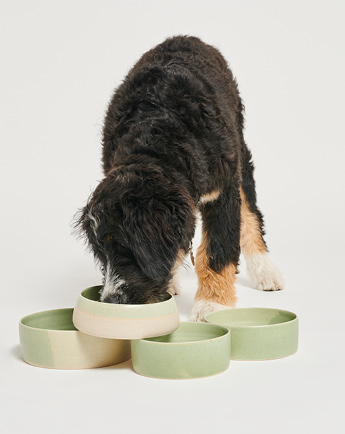
Choose the option that feels right for you
Both methods described above are great ways to teach “sit”. In the first option, you wait until your puppy offers the desired behaviour on his own. By rewarding him afterwards, you create a stronger pattern in his brain because it was his own idea to sit. You must say “yes” or click with the clicker as soon as your puppy sits. That way you clearly signal that he has shown the right behaviour and he is rewarded with something tasty.
The second option works better for puppies who need a bit more motivation to sit. To teach this method properly, you’ll want to repeat it 10–15 times in a calm, comfortable environment. It helps to count out the number of treats beforehand so you can keep track of how many repetitions you’ve already done.
Using the word “sit”
You may have noticed that the word “sit” wasn’t used in either option at first. That’s because it’s best to wait until your pup can sit reliably about 80% of the time. Once he’s that consistent, you can start linking the verbal cue “sit” to the action. When your pup almost fully understands the behaviour, you can begin to use “sit” as a cue.
If you use option 1 to teach “sit”, you say the word “sit” just before your pup is about to sit down. Then you immediately say “yes” or click to show that your little rascal has shown the desired behaviour. For option 2, you say “sit” right before you lure your pup into a sit. Again, you mark the behaviour with “yes” or a click, and then give the treat you already had in your hand. Puppies learn skills by making connections. That’s why you’ll need to repeat the exercise many times so your puppy learns to connect the word “sit” with the position he takes.
Depending on your pup’s concentration and interest in training, you can do this session once a day. If your puppy struggles to focus for longer periods, you can break the training into several shorter sessions spread throughout the day.
Basic skill 2: Stay
When your puppy is excited to see you, it’s not unusual for him to run towards something or chase after you, usually without thinking about the possible consequences. That’s why teaching the “stay” cue is such an important basic skill. It helps your pup develop impulse control. Puppies naturally have very little control over their emotions. Their drive for food, love, and play can easily outweigh their sense of safety or concern for the people around them.
The “stay” cue is a very versatile instruction that you can use during play or to keep your puppy safe. For example, you can use it while playing hide-and-seek or when you’ve dropped a glass, to prevent your puppy from stepping on the shards. The “stay” cue also works beautifully in combination with “sit” and “come”.
Exercise
- Ask your puppy to sit.
- Wait 2 seconds and then say “yes” or click. Give the reward afterwards.
- Once your puppy can do this easily, start increasing this delay.
- Use the “stay” or “wait” cue once your puppy can remain sitting for 15–30 seconds.
- Introduce a release cue by asking your puppy to sit. After the right amount of time has passed, say your release word and show him the treat. He’ll have to get up to come and get his reward.
- Once your pup understands this, you can start increasing the distance of the exercise in the same way.
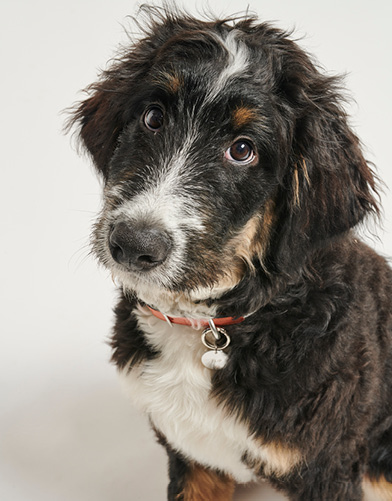
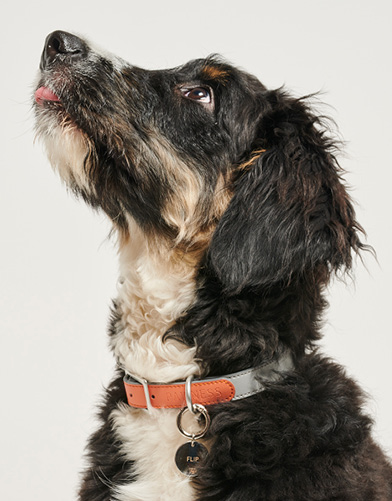
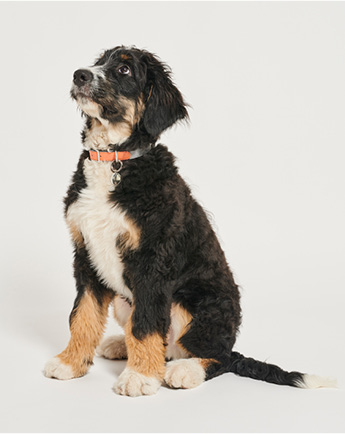
Build up slowly
When teaching this skill, it’s important to keep rewarding your pup for holding the sitting position. Ask your puppy to sit, and gradually delay giving the treat. Start by waiting just 2 seconds. Once that goes well, increase the time to 3–5 seconds. This teaches your puppy that sitting really means staying seated until you give the release cue.
In the beginning, you don’t use the actual “stay” cue yet. You only add the cue once your puppy can hold his sit for 15–30 seconds.
You also need to teach your puppy when he is allowed to break the sit. Choose a release word or cue that feels natural for you both. This could be “okay”, “free”, or “go”. To teach your little rascal that this word means he’s free, toss the treat a little distance away from him. Your dog will quickly learn to link this to getting up.
Never use the “stay” cue for long periods. It should not be used when you’re leaving the house for a few hours, for example. You don’t want all your hard work to be undone by teaching your puppy that when he “stays”, you don’t come back.
Basic skill 3: Come
“Come” is an essential cue that can literally save your puppy’s life. It’s important to train your dog always to come back to you when you call him. This basic skill can prevent dangerous situations. It can even be life-saving if your puppy chases after a ball that rolls towards the street. By calling him back with the “come” cue, you can help him run away from oncoming traffic.
Training your puppy to come when called requires you to build a positive relationship with your little rascal – a strong foundation of trust and respect. If you frequently use harsh corrections, he’ll be less inclined to come to you when you call. That’s why positive puppy training is so helpful when you start working on basic commands.
When you train your pup to come back, it should always be followed by treats when he shows the desired behaviour. Especially in the beginning, use this cue only in positive situations with lots of rewards – not when it’s time for a bath or to go into the crate. Also, use the “come” cue only outdoors when you’re calling your puppy back. Indoors, choose a different word to call him. This prevents the recall cue from losing its power and meaning.
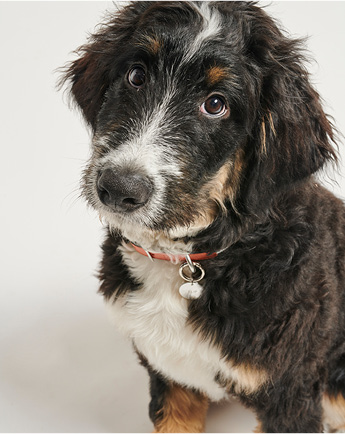
Exercise
- Choose a place with as few distractions as possible to start training. Put your puppy on an 180 cm lead.
- Say your puppy’s name and then the “come” cue.
- When your puppy comes to you, say “yes” or click and react with lots of enthusiasm!
- Once he’s reached you, reward him generously with excitement and many small treats
- As your puppy gets better at coming when called, gradually increase the distance or move to a place with more distractions. This helps him really master the skill.
Teach the skill step by step
To teach this skill properly, start in a low-distraction area with your puppy on an 180 cm lead. This reduces the chance that your puppy ignores you when you call him. Because there’s a good chance your little rascal will come to you right away when you call, you can immediately pair your call with the “come” cue. Walk backwards a little while keeping the lead loose so it remains his choice to come to you. As soon as he moves towards you, say “yes” or click – and respond with lots of enthusiasm to encourage him. Your body language and tone of voice are very important here. Use a happy, sing-song voice when you call him. If you sound angry or look unfriendly, he’ll probably try to avoid you.
Once your puppy starts to understand the “come” cue, you can begin using it on walks. Randomly call “come” while you’re out together. If he comes, reward him lavishly with enthusiasm and lots of tasty treats. This helps your puppy build a positive association with coming back to you, because he knows love and goodies are waiting for him. Once your pup is doing well with this during walks, you can use a longer line. Practise the cue from different distances and in increasingly distracting environments.
Basic skill 4: Down
As a puppy parent, there’s nothing more rewarding than successfully teaching your pup a new cue – especially when it’s useful in everyday situations. Teaching your dog to lie down is a basic puppy training cue that can help you manage your pup’s behaviour. Lying down is a more stable position than sitting, which means your puppy is less likely to spring up unexpectedly.
Before you can teach your pup to lie down, he first needs to master the “sit” cue. Sitting is the first step towards lying down, so your dog must know how to sit on cue. Also, remember that your body language is more important to your pup than your words. Dogs respond primarily to your overall posture and movements.
To make training “down” more pleasant, you might want to treat your puppy to a nice new mat or blanket. This gives him a comfortable surface to lie on. Just like with the other cues, you’ll also need plenty of treats. Make sure you have them ready before you start training.
You can teach “down” in two different ways:
Option 1
- Put your little rascal in a sit and hold a treat close to his nose. Keep it close enough for him to smell it, but not so close that he can grab it.
- Slowly lure your puppy towards the ground with the treat.
- If your pup pops back up, don’t give him the treat. Say “yes” or click only when your puppy is fully lying on the ground, then reward him.
- Once your pup has the movement figured out, start saying “down” as he lowers himself to the floor.
Option 2
- Sit on the ground with your puppy and hold a tasty treat in your fist, resting your hand on the floor. Your pup will likely try again and again to get the treat out of your hand, but you wait until he lies down completely.
- When he is fully lying down, say “yes” or click, then make an exaggerated turning motion with your hand and open your fist so he can take the treat.
- As soon as your puppy lies down and is rewarded with a treat, mark the action with the word “down”. This way he learns to connect the cue with the correct action.
You increase your chances of success with your little rascal by working in short 5–10-minute sessions. Give him a rest after each training session so he can absorb and process what he has learned
Keep in mind that lying down is not as easy for your dog to learn as “sit” or “stay”. It’s a less natural movement because it puts your puppy in a more vulnerable position.
Be patient and stay positive during puppy training
For every basic skill you work on with your puppy, the same rule applies: be patient and stay positive. Some dogs pick up new behaviours more quickly than others. So try not to compare your puppy with the neighbour’s dog, your best friend’s dog, or anyone else’s. Just like people, every dog is an individual who learns at their own pace. If you know the right techniques – and you’re willing to invest the time – almost every pup can learn basic skills. Plus, the whole process is a fun experience for both of you and will only strengthen your bond. There’s nothing better than working together with your puppy.
However you choose to train, never forget that it should be fun for your puppy. Always end a training session on a positive note and with success. Even if things didn’t go exactly as you hoped, stay upbeat. Your puppy should associate training with a fun activity you do together. Also, don’t go on and on. If you notice your puppy’s concentration fading, stop in time. This helps prevent frustration and unwanted behaviour.
Puppy training means lots of rewarding
Alongside a positive attitude and plenty of enthusiasm, rewards are also very important. When your puppy gets treats as a reward during training, he sees it as a positive and enjoyable experience. He starts linking the desired behaviour to the rewards. When choosing training snacks, it’s worth thinking about what you use. Because your puppy will eat several treats over a short time, it’s best to choose small training treats. They also need to be super tasty. After all, we tend to work harder when we’re rewarded with our favourite snacks! Of course, you can use special training treats, but your puppy might also go crazy for cheese or sausage. Test which snack is his absolute favourite and then work with three different rewards so you can switch them up and keep things exciting.
Sources:
– Martin Gaus
– Paula Nowak, CPDT-KA and CTDI
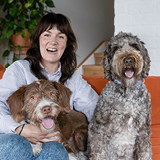
I’m Denise, the founder of Pawness. The company was born out of my love for my dog, Bo, and my search for fair, beautiful products for dogs. I believe that every choice matters: for your dog, for the planet, and for the people behind the products. Through these blogs, I help puppy parents make more conscious choices—without making it complicated.