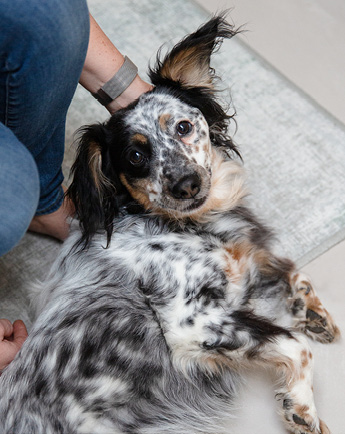
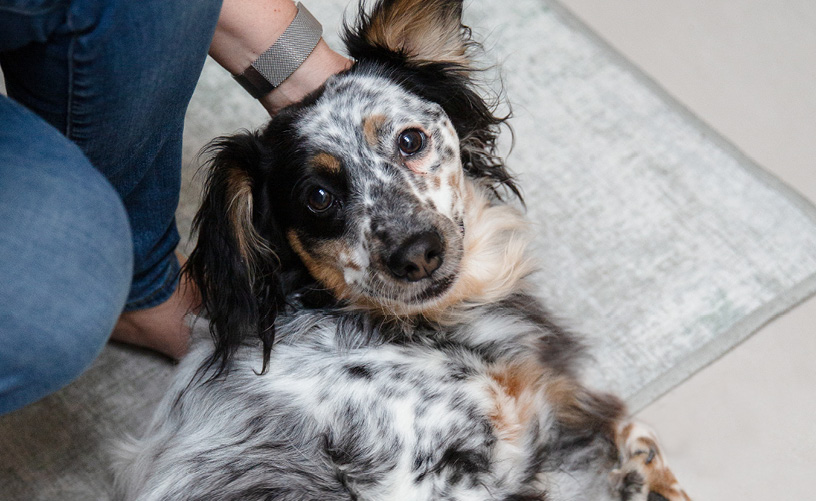
Every spring, the same story: you find hairs on the sofa, in your coffee, and somewhere on your sweater, even though you brushed your dog just the day before. Spring shedding is a yearly recurring phenomenon for many dog guardians, and it can sometimes feel overwhelming. Hair everywhere, every single day. Still, it’s a completely natural process that you can handle just fine with the right approach. In this blog, you’ll read how to guide your dog through the shedding season, what’s normal and what isn’t, and how to keep your dog’s coat in top condition.
Why do dogs shed more in spring?
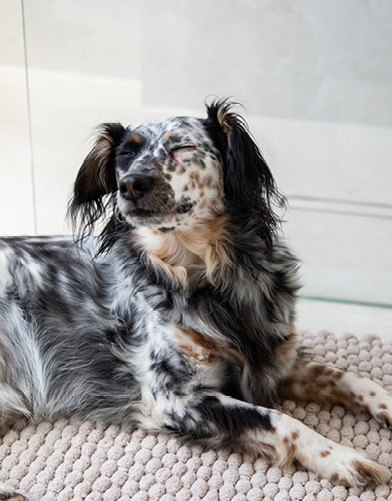
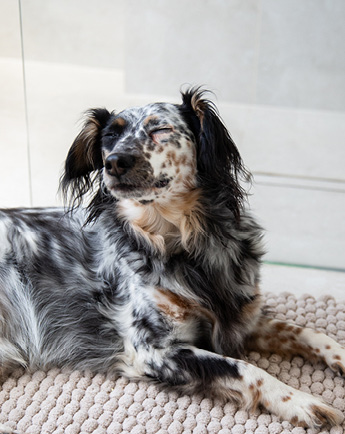
It’s no coincidence that your dog sheds in spring. It’s directly linked to the change of seasons. As the days grow longer and daylight increases, your dog’s body registers this as a signal to let go of the winter coat. The thick winter coat that kept your dog warm over the past months is shed to make room for a lighter summer coat. This is called the shedding period, a normal part of the hair growth cycle that almost all dogs go through, whether they live mostly indoors or outdoors.
The timing and intensity differ per breed and per individual dog, but the principle is always the same: old hairs fall out, new hairs take their place. Most dogs also shed in autumn, when the light summer coat makes way for a thicker winter coat. Spring and autumn are therefore the two most intense moments of the year when you’ll notice the most loose hair around the house, on clothes, on the sofa and in your car.
In some breeds, a dog’s coat consists of two layers: a top layer of longer hairs and a thick undercoat that insulates and protects. During the shedding period, it’s especially this thick undercoat that loosens and leaves dead hairs behind. If your dog isn’t brushed regularly, old hairs can get trapped in the coat, leading to tangles, overheating, or irritated skin. Regular coat care is therefore not just about looks; it’s a matter of comfort.
Dog is shedding: what’s normal and what isn’t?
A dog sheds a little bit all year round. But there’s a clear difference between normal hair loss and excessive shedding that requires attention. During the spring shedding period, it’s perfectly normal for a noticeable amount of hair to come loose compared to the rest of the year. As long as the coat still looks healthy — shiny, full and without bald spots — there’s usually nothing to worry about.
Do watch out for signs of abnormal hair loss. You can recognise this by bald patches, a dull or brittle coat, or skin that feels red, dry or flaky. If your dog scratches, bites or licks itself excessively until flakes or irritated spots appear, this may indicate an underlying problem. Think of parasites such as fleas, food intolerances, a hormonal imbalance or ongoing stress. When a dog loses hair in areas where there should normally be a dense coat, or when the coat becomes thinner and dull at the same time, it’s wise to visit your vet. “Why is my dog shedding so much?” is a question that’s asked more often than you might think — and the answer is not always related to the season.
A healthy coat — shiny, strong and even — is a sign of a healthy body. Light shedding in spring fits within that picture. Excessive shedding outside the normal periods, however, calls for a closer look.
Short-haired, long-haired and wire-haired dogs: not every coat is the same
Not every dog sheds to the same degree. The coat type largely determines how intense the shedding period is and which approach works best. Short-haired dogs like Labradors, Beagles, or Dalmatians shed year-round. Even though their short coat looks low-maintenance, their short, stiff hairs are experts at working their way into fabrics and upholstery. A smooth coat doesn’t necessarily mean less work.
Long-haired dogs such as Golden Retrievers, Border Collies, or Irish Setters have a long coat with a substantial undercoat that sheds in larger tufts during spring. For these breeds, regular brushing is not a luxury but a necessity. Wire-haired and curly-coated dogs generally shed less visibly. A poodle or labradoodle releases fewer loose hairs, but still needs regular trimming and brushing to keep the coat healthy.
The heaviest shedding season is reserved for double-coated breeds. Siberian Huskies or German Shepherds are notorious for their thick coats and the huge amount of hair they release in spring. In other breeds, the shedding process is milder, but still noticeable. One dog sheds barely visibly; with another, it can feel like you’re getting a second dog out of the coat. It helps to know which category your dog belongs to so you can tailor your grooming routine accordingly.
Regular brushing: the foundation of spring coat care
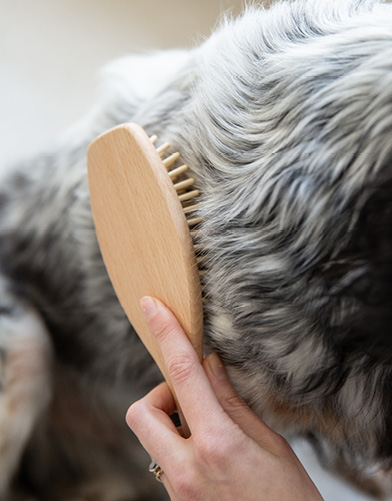
Regular brushing is the most direct and effective way to remove loose hairs before they end up all over your home. By brushing your dog daily or several times a week, you remove the dead hairs that are coming loose, stimulate blood circulation in the skin, help distribute the coat’s natural oils and support the healthy growth of new hairs. Regular combing also prevents matting, which can develop quickly in long-haired dogs if the undercoat isn’t properly brushed through.
With short-haired dogs, a quick brushing session is often enough. For long-haired or thick-coated dogs, a consistent grooming routine is truly essential. Always work from the skin outward: start close to the skin and work your way out to the ends of the longer hairs. This way, you also lift the deeper undercoat and remove loose hairs before they turn into mats.
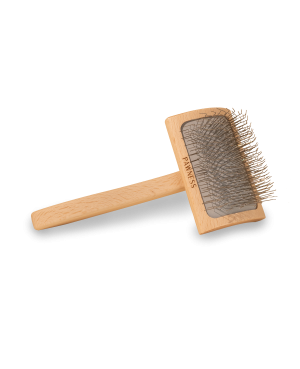
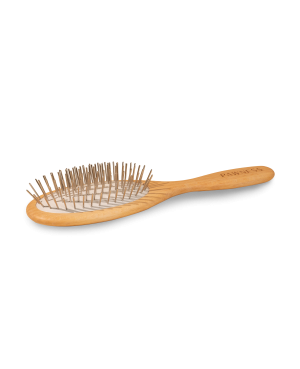
Pawness offers an extensive collection of brushes, so there’s always one that suits your dog’s coat. For dogs with a curly coat — such as labradoodles or poodles — the Slicker Brush is the right choice. It works its way through the curls without pulling and effectively removes loose hair and tangles. Do you have a dog with an easier-going coat, or would you simply like a brush that works for almost every dog? Then the Gentle Touch Brush is a true all-rounder: gentle enough for sensitive dogs, effective enough for daily use. Regular brushing doesn’t have to be a chore; with the right brush, it becomes a pleasant moment of connection between you and your dog.
The right shampoo and care for healthy skin and coat
Brushing alone isn’t enough. Bathing your dog during the shedding period helps loosen dead hair more quickly, keeps the skin healthy, and supports the growth of new hair. Ideally, choose a shampoo that is gentle on the skin’s natural oils. Harsh formulas can dry out the skin, cause a brittle coat and throw the balance of skin and coat off — the exact opposite of what you want to achieve in spring.
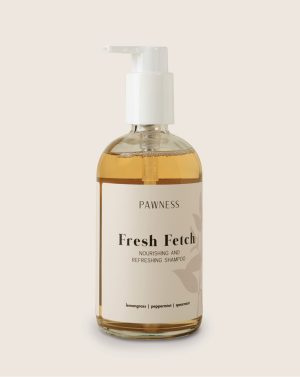
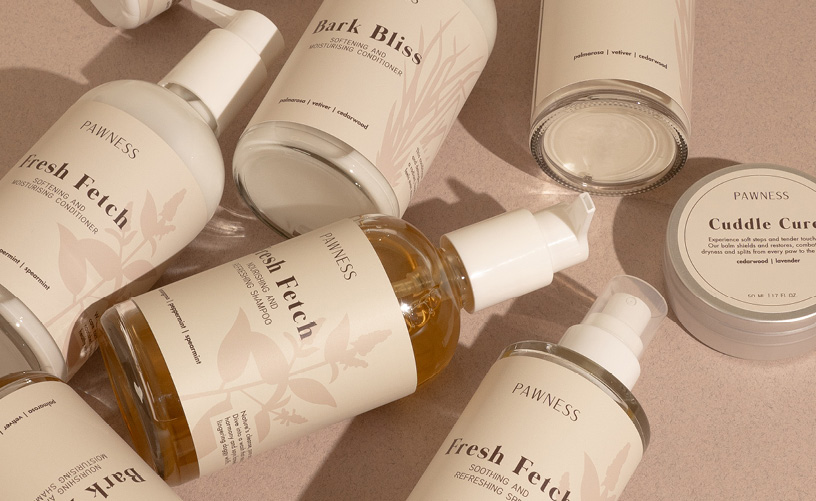
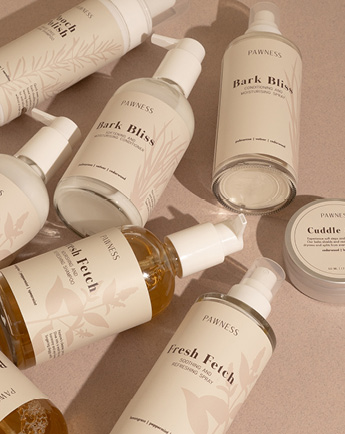
Pawness’ Bark Bliss Shampoo is a gentle, natural shampoo that cleans thoroughly without causing irritation. The formula supports healthy skin and contributes to a strong, shiny coat, even during the more intense shedding period. Do you use the shampoo regularly? Then the Bark Bliss Refill Pouch is a smart choice: 500 ml to refill your glass bottle twice, while also cutting down on waste.
After washing, a nourishing spray is a great way to keep the coat soft, easy to brush and shiny. Pawness’ Bark Bliss Spray is a leave-in conditioner that you can apply after drying: ideal for dogs with a long coat or dry skin. The spray reduces static, makes the coat easier to comb and adds a visibly healthy shine. Cuddle Cure Balm is specially created for sensitive areas such as nose and paws, including in spring, when the skin can be extra sensitive due to the changing seasons and shifting outdoor conditions.
Foam Droogshampoo – Pooch Polish
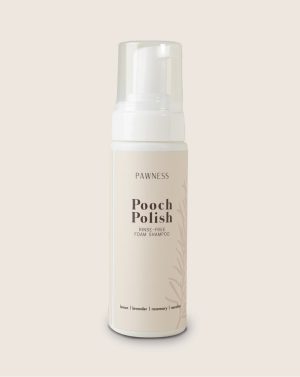
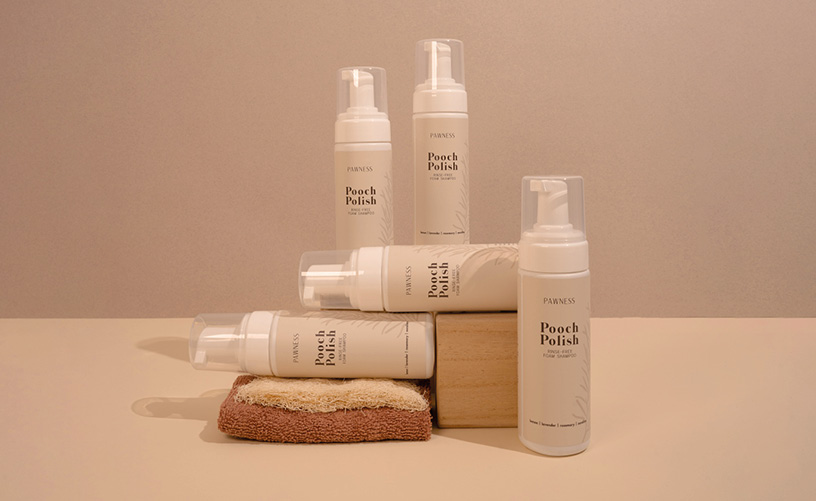
For the days between baths, Pooch Polish Foam Dry Shampoo is a lifesaver. This no-rinse foam shampoo works without water and gives your dog a quick freshen-up after a walk through damp spring grass. The formula is 100% natural and vegan, suitable for puppies from 12 weeks and smells pleasantly of lemon, lavender, rosemary and nerolina. Your dog’s coat looks immediately fresher and fuller — with no fuss and no rinsing.
Nutrition and fatty acids for a shiny, strong coat
A shiny coat and healthy skin don’t just start with what you do on the outside — they also depend on what your dog eats every day. Essential fatty acids such as omega-3 and omega-6 play a key role in skin and coat quality. A deficiency can lead to a dull coat, dry skin, excessive shedding or even a brittle coat that breaks more easily. Do you feel that your dog’s coat looks a bit flat or thin after the shedding season? Then it may be worth taking a closer look at their diet.
Make sure your dog gets enough fluids and a balanced diet suited to their breed, age, and weight. Stress can also contribute to excessive hair loss, even outside the regular shedding periods. Exercise, rest and a predictable daily routine help your dog stay in balance — and you’ll see that reflected in the coat. Keeping a dog healthy is a combination of good nutrition, consistent coat care and daily attention. That combination is what makes the difference between a coat that looks lifeless and a coat that truly shines.
Practical tips to reduce loose hair in your home
No matter how well you care for your dog, loose hair simply comes with the territory — especially in spring. But you can significantly reduce the amount of hair in your home by building a few simple habits. Brush your dog outside whenever possible, or at a fixed spot indoors. Use a dog blanket on the sofa. Wash your dog’s bedding and blankets regularly. And keep your brushing routine consistent — better a short session every day than one big grooming session once a week. This keeps the coat in balance and helps old hairs shed in a controlled way instead of ending up all over the house.
You don’t need to fight your dog’s shedding, but you can certainly guide it in the right direction. With the right grooming routine, the right products and a bit of patience, you’ll get through the shedding season smoothly — and your dog’s coat will shine once the new spring coat has fully come through.
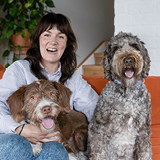
I’m Denise, the founder of Pawness. The company was born out of my love for my dog, Bo, and my search for fair, beautiful products for dogs. I believe that every choice matters: for your dog, for the planet, and for the people behind the products. Through these blogs, I help puppy parents make more conscious choices—without making it complicated.