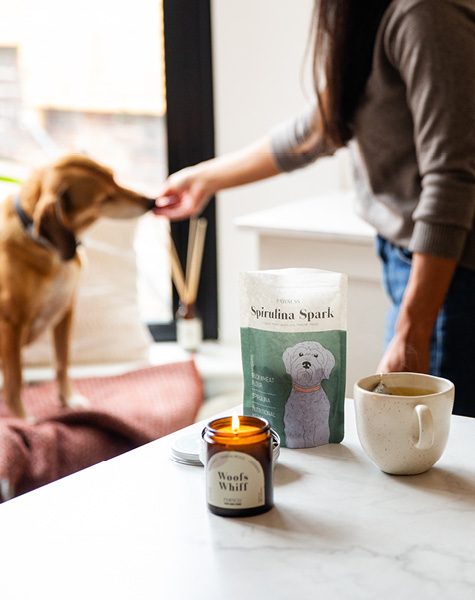

Spirulina for dogs is a natural blue-green alga that is increasingly appearing as a functional ingredient in high-quality dog food and snacks. It is rich in protein, vitamins, minerals, and antioxidants and is used as a dietary supplement to support dogs’ overall health. In this article, we explain what spirulina actually is, which nutrients it contains, what it can do for your dog, and why it is included in our Spirulina Spark training treats.
What is spirulina?
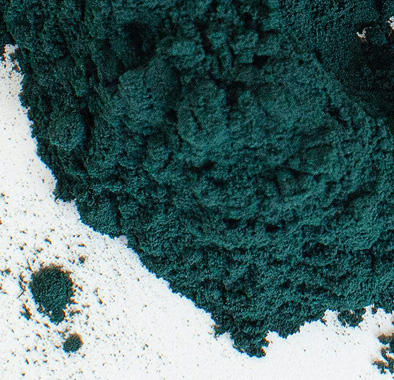
Spirulina is a blue-green alga that naturally occurs in tropical freshwater lakes. It has been used for decades as a dietary supplement for humans and, increasingly, for animals as well. Botanically, spirulina belongs to the cyanobacteria — a group of microorganisms that produce energy through photosynthesis.
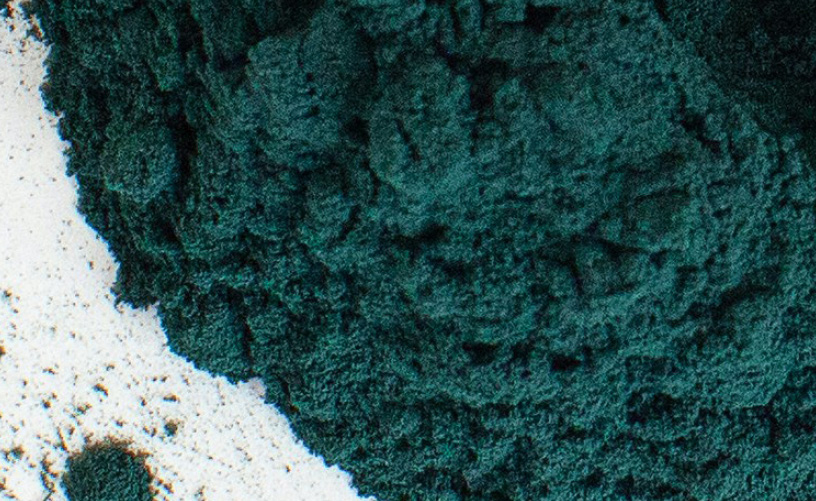
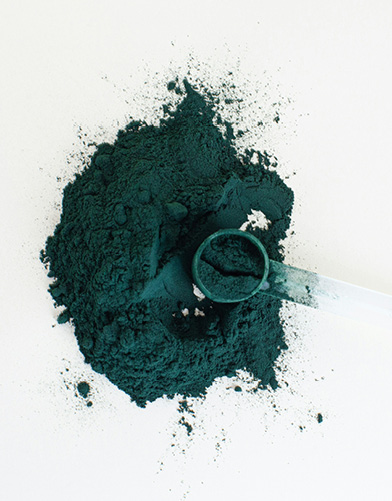
These days, the alga is commercially cultivated in controlled environments, often in indoor basins or protected ponds. This makes it possible to closely monitor quality and purity. Organic spirulina is grown without synthetic pesticides or artificial additives, making it a clean and reliable source of nutrients. Spirulina comes in various forms: as a powder, in tablets, or as an ingredient in processed products such as treats.
The nutritional value of spirulina at a glance
Spirulina is a rich source of a wide range of nutrients that contribute to dogs’ health. It contains, among other things:
- Proteins: spirulina consists of 60 to 70 percent protein and provides all essential amino acids. This makes it a remarkably efficient protein source compared with many other plant-based foods.
- Vitamins: including B vitamins, vitamin E, and beta-carotene (a precursor of vitamin A). Vitamin C is present in small amounts. Minerals: such as iron, magnesium, potassium, calcium and many others — all of which play a role in various bodily functions.
- Minerals: such as iron, magnesium, potassium, calcium, and many others—play a role in a wide range of bodily functions.
- Antioxidants: particularly phycocyanin, the blue pigment that is characteristic of the alga. Phycocyanin helps protect cells against damage from free radicals.
- Fatty acids: including gamma-linolenic acid (GLA), an anti-inflammatory omega-6 fatty acid.
The nutrients in spirulina are generally well absorbed, partly because the alga lacks a hard cell wall that would otherwise make digestion more difficult.
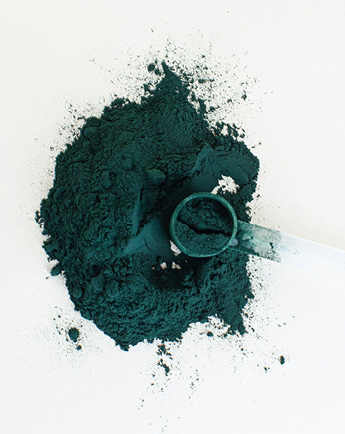
Spirulina and the immune system of dogs
One of the most studied properties of spirulina is its effect on the immune system. The high concentration of antioxidants — including phycocyanin and beta-carotene — protects the body against oxidative stress. Free radicals can damage cells and tissues; antioxidants neutralise these compounds, thereby supporting recovery and the body’s natural defences.
There are also indications that spirulina has a beneficial effect on the activity of immune cells, such as macrophages and natural killer cells. This can contribute to robust immunity and the body’s ability to recognise and fight pathogens. Whether spirulina actually improves allergy symptoms or prevents specific diseases has not yet been sufficiently proven — but as a support for a healthy immune system, it certainly offers benefits.
Spirulina and digestion
One aspect that is discussed less often but is relevant to the daily health of dogs is the effect of spirulina on digestion. The alga contains chlorophyll and certain polysaccharides that can support the growth of beneficial gut bacteria. A healthy gut microbiome plays a role in nutrient absorption, immune regulation, and overall well-being in dogs.
Spirulina does not contain fibre in the usual sense, but the alga’s structure and the presence of bioactive compounds help create a gut environment less favourable to harmful bacteria. This makes spirulina an interesting addition for dogs with a sensitive digestive system, provided it is introduced gradually. For dogs that already receive a complete and balanced diet, spirulina is not a cure for digestive problems — but it can be a meaningful supplement to support long-term gut balance.
Coat, skin and overall vitality
The nutrients in spirulina can also contribute to healthy skin and a shiny coat. Beta-carotene plays a role in the production of vitamin A, which is essential for healthy skin, robust tissues and the normal function of the mucous membranes. Fatty acids such as GLA support the skin barrier and can help reduce dryness or flakiness.
The iron in spirulina contributes to the formation of red blood cells and the transport of oxygen throughout the body. Adequate iron status has an antioxidant effect by supporting enzymes that protect cells and also influences vitality and endurance in dogs. Active dogs can therefore perform for longer without becoming tired as quickly.
Dogs with a coat that has lost its shine or skin that reacts more quickly to environmental factors may benefit from the combination of nutrients spirulina provides — as a supplement to a complete diet.
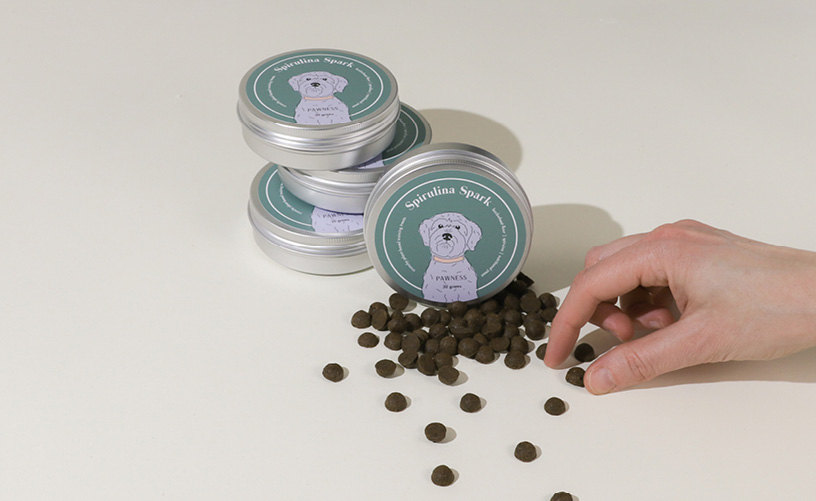
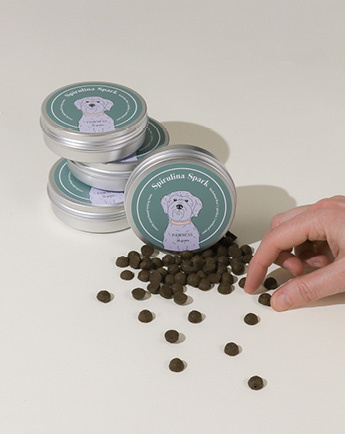
Bakproces Spirulina Spark Training Treats
Spirulina for dogs: a supplement, not a replacement
It is important to place spirulina in the right context. Although the alga contains many nutrients, it is a supplement — an addition to a balanced diet, not a replacement for it. A complete dog food remains the foundation. Spirulina can enrich that foundation, but it does not make up for deficiencies in an incomplete diet.
The right dosage depends on the dog’s weight and overall condition. Smaller dogs generally need less than larger dogs. It is advisable to start with a low dose and gradually increase it so the digestive system can adapt. When in doubt, consult a veterinarian, especially if your dog already has existing health issues.
One specific point of attention concerns thyroid problems. Spirulina has a low iodine content compared with other types of seaweed, but for dogs with thyroid disorders it is still wise to consult a veterinarian before adding spirulina to their diet.
What to look for when choosing spirulina products?
Not all spirulina products are of equal quality. The quality of the alga strongly depends on its origin and growing conditions. Always choose products where the spirulina comes from controlled sources and is free from heavy metals and other harmful contaminants. A product that meets human-grade quality standards offers additional assurance of purity.
Also check the other ingredients. Products without artificial colourings, synthetic flavourings or unnecessary fillers are preferable. Store spirulina products in a cool, dry place, away from direct sunlight, to preserve their nutritional value.
When it comes to supplements, less is sometimes more.
A product with high-quality spirulina as its core ingredient — without a long list of added substances — is generally more effective than a product that tries to offer everything with many different ingredients.
Dog Training Treats – Spirulina Spark
Spirulina Spark: Spirulina in a daily snack
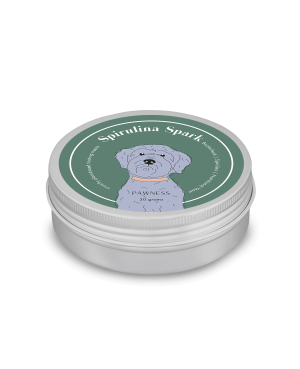
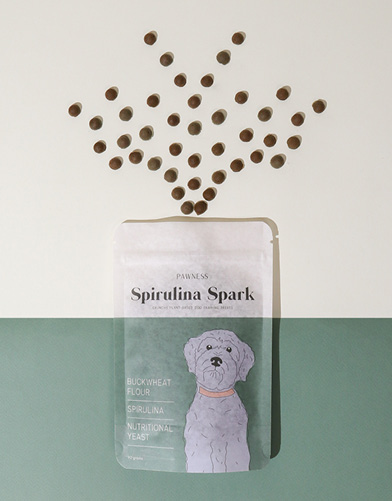
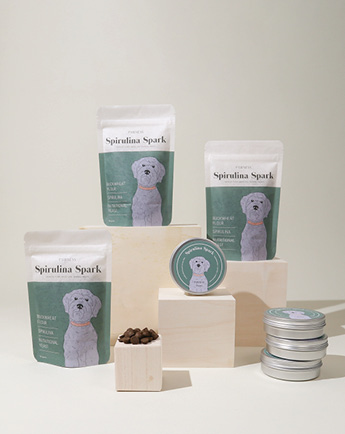
A practical way to offer spirulina to dogs is through a crunchy training treat. Our Spirulina Spark is made from buckwheat flour, spirulina, and nutritional yeast — three ingredients with clear nutritional roles. Buckwheat provides complex carbohydrates and supports natural energy, while nutritional yeast adds B vitamins and makes the flavour more appealing to dogs.
The treats are wheat- and gluten-free, making them suitable for dogs with a sensitive stomach or food allergies. They are handmade in the Netherlands, oven-baked in small batches and contain no artificial additives. The spirulina we use meets strict quality standards.
Spirulina Spark is available in a 30-gram tin, a 90-gram refill bag, or as a bundle. Thanks to their small size, the treats are also ideal as a training reward, allowing dogs to receive multiple snacks per session without their calorie intake becoming too high.
Because the treats are small and easy to digest, they also fit well into a daily routine outside the training context. A treat after a walk or as a moment of connection has, in addition to its nutritional role, a behavioural value: it strengthens the bond between dog and owner and makes positive reinforcement easy without disrupting the dog’s diet.
Allergy information and points of attention for spirulina
For most dogs, spirulina is safe when given in appropriate amounts and sourced from reliable sources. There are, however, situations in which caution is warranted.
Dogs that receive spirulina for the first time may, in rare cases, experience mild digestive issues such as loose stools. This is often temporary and disappears as the amount is gradually increased. If symptoms persist, it is advisable to stop and consult a veterinarian.
For dogs with known food allergies, always check the full ingredient list of the product, even though spirulina itself rarely causes allergic reactions. The other ingredients in a treat or supplement can still play a role. For specific allergy information, always refer to the product description or contact the manufacturer.
Conclusion
Spirulina for dogs is a functional ingredient with broad nutritional value. It supports the immune system through antioxidants, contributes to healthy skin and coat, provides proteins and minerals, and can help improve overall condition and vitality. It is not a miracle cure, but it is a meaningful addition to a balanced diet — especially when used in a high-quality product, such as a treat that is consciously formulated with the dog’s health as a starting point.
Sources:
https://pubmed.ncbi.nlm.nih.gov/34124121
https://pubmed.ncbi.nlm.nih.gov/37106838
https://pubmed.ncbi.nlm.nih.gov/39592737
https://pubmed.ncbi.nlm.nih.gov/42092959
https://pubmed.ncbi.nlm.nih.gov/11749812

I’m Denise, the founder of Pawness. The company was born out of my love for my dog, Bo, and my search for fair, beautiful products for dogs. I believe that every choice matters: for your dog, for the planet, and for the people behind the products. Through these blogs, I help puppy parents make more conscious choices—without making it complicated.