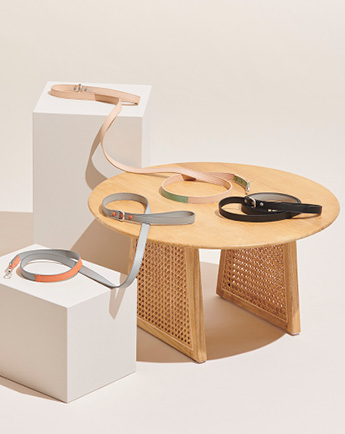
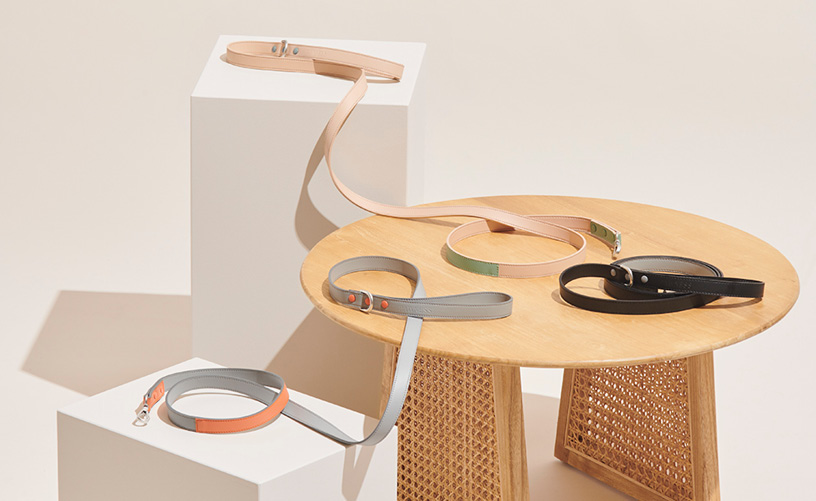
A leash is one of the most important purchases you’ll make when you bring a puppy home. Not only because you’ll be walking your new best friend several times a day, especially while you’re still housetraining that little fluffball. It’s also what connects your puppy to you and keeps them safe on the street, around traffic, and around other dogs. But how do you choose the right leash for your new sidekick? In this blog, we’ll walk you through the 5 most common mistakes people make when choosing a leash for their puppy, so you can avoid them.
#1 Buying a leash that’s too long
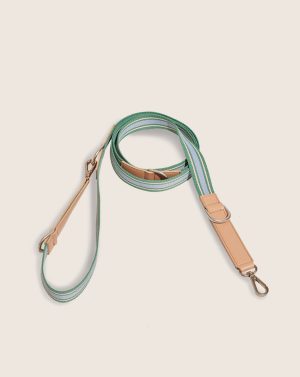
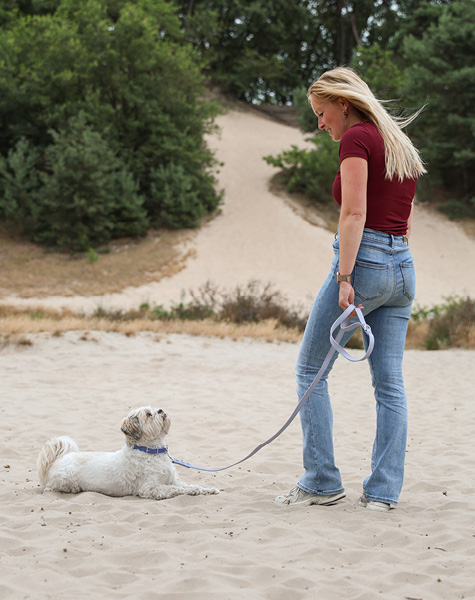
Many dog parents love the idea of an extra-long or retractable leash, so their puppy can sniff around while they stay comfortably on the sidewalk. But an extra-long leash actually isn’t that handy at all. It provides little to no feedback to your dog, which makes training your puppy much harder. With a leash that’s too long, your puppy can wander too far from you and, for example, eat something from the grass they shouldn’t or suddenly change direction and run into the bike lane. The ideal length for a puppy leash is between 150 and 200 cm. That’s why at Pawness we chose a leash length of 180 cm. Not too long and not too short, so you can keep enough control while walking and training your puppy.
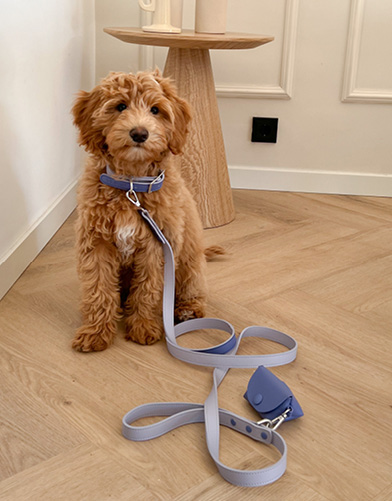
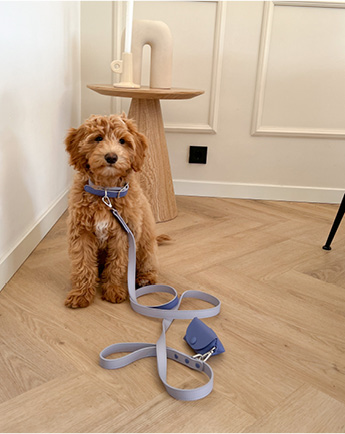
Puppy Teddy met de Mauve Mist Wandelcollectie
#2 Buying a leash that’s too heavy
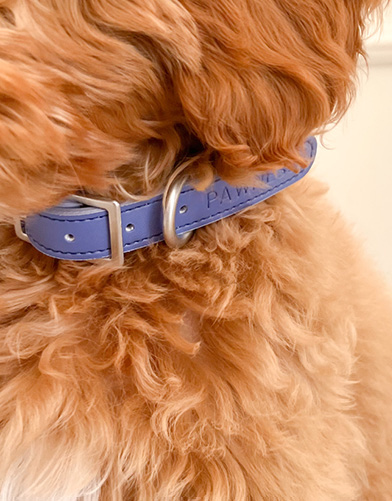
You can probably imagine that a rottweiler puppy needs a stronger leash than a little dachshund. A stronger leash also means a heavier clasp, and sometimes that clasp can be a bit too heavy for a still-developing puppy neck. As with children, muscles still need time to develop, and a leash that’s too heavy can cause issues, especially for smaller breeds. Always make sure you choose a puppy leash with a clasp made from lightweight material. All Pawness leashes are fitted with light, nickel-free hardware, making them suitable for almost all puppy breeds.
#3 Buying a leash that wears out quickly
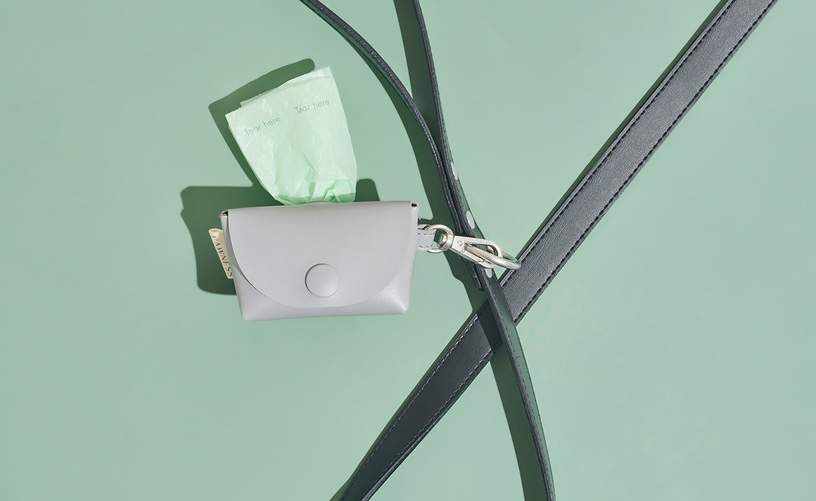
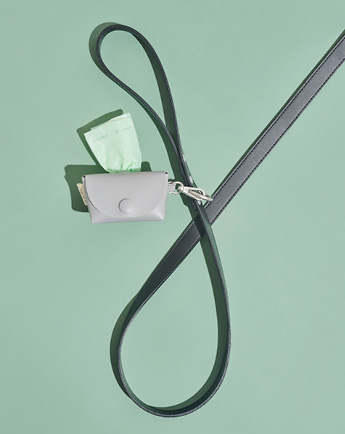
With a puppy, you’ll naturally be doing a lot of training. That means the leash will sometimes drag over the ground, get wet, get dirty, or even be chewed on. That’s why it’s important to buy a strong leash that you can also easily clean when needed. A nylon leash is therefore a little less suitable for young dogs. This is because the material is harder to clean, gives in more easily to sharp puppy teeth, and is more sensitive to moisture and potential mould. For exactly that reason, we at Pawness chose to make our leashes from vegan leather and recycled polyester. This is not only toxin-free but also wonderfully durable.
#4 Choosing a leash that’s too wide
Many dog parents love the look of a wide leash with beautiful detailing. And while this is a popular choice for many breeds, such as the American Stafford, it’s not the best type of leash for a puppy. As we already mentioned in tip #2, a leash that’s too heavy can cause discomfort and problems for a young dog whose neck is still developing. A leash that’s too wide adds unnecessary weight to your puppy’s neck and puts extra strain on your little companion.
#5 Not having a spare leash
It can happen to anyone: after a walk in the woods, you accidentally leave the leash in the car, and the next day your partner takes the car to work. Suddenly you’re standing there empty-handed with a little rascal who really needs to go potty. Before you know it, you’re pulling shoelaces out of your shoes, just to have something that vaguely works as a leash. The easy way to avoid this? Always make sure you have a spare leash for your puppy at home, just in case. It’s much better to have an extra leash on hand than to be left without one when you need it most.

I’m Denise, the founder of Pawness. The company was born out of my love for my dog, Bo, and my search for fair, beautiful products for dogs. I believe that every choice matters: for your dog, for the planet, and for the people behind the products. Through these blogs, I help puppy parents make more conscious choices—without making it complicated.