Vacation with your dog – the days are getting longer, and the sun is shining more often: summer is here again! It’s time to go out and about with your best friend. Whether you decide to stay close to home or go further away, you can still bring your furry companion along. If you need help deciding what to consider or how to prepare, don’t worry. In this article, you’ll find all the tips for a worry-free vacation with your dog!
Why Go on Vacation with Your Dog?
A vacation is the perfect opportunity to adventure with your furry companion. It’s time to create new memories and strengthen the bond between you! Moreover, a new environment is excellent for the socialization of your (young) dog. Everything in a new place is fascinating, distracting, or maybe a bit exciting for your furry friend. It’s the perfect place to train! New situations and unfamiliar smells offer numerous challenges for your dog; a little challenge is good for the brain!
Plus, your dog is your best friend, a family member. You wouldn’t leave them behind, right?
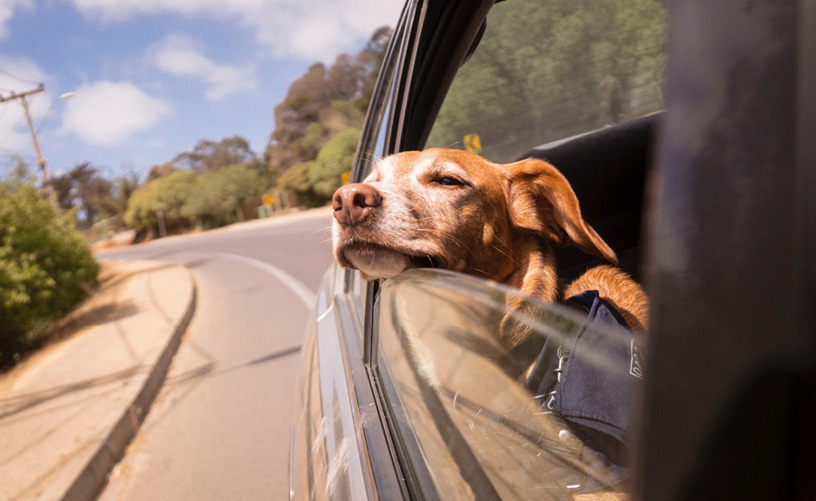
Benefits of Going on Vacation with Your Dog
Okay, we understand that bringing your dog on vacation also poses challenges. How do you transport your dog, and where will you accommodate them at the destination? What extra things must you bring, and what should you consider? We’ll address these issues shortly. First, let’s take a look at the benefits of bringing your dog on vacation:
Quality time
You and your dog (and perhaps your family) get to spend time together and have the whole day for each other. This is the perfect opportunity to create a strong bond with your dog, so make the most of it!
Good socialization
As mentioned earlier, a vacation means a new environment, new smells, and new people. This is great for the socialization and mental stimulation of your dog!
Training in a different place
It’s great if your dog behaves well during training sessions and obediently repeats tricks at home. But does your dog still listen well when there are many distractions around? Training in a new place is essential to make your dog a flexible and well-behaved companion in any situation
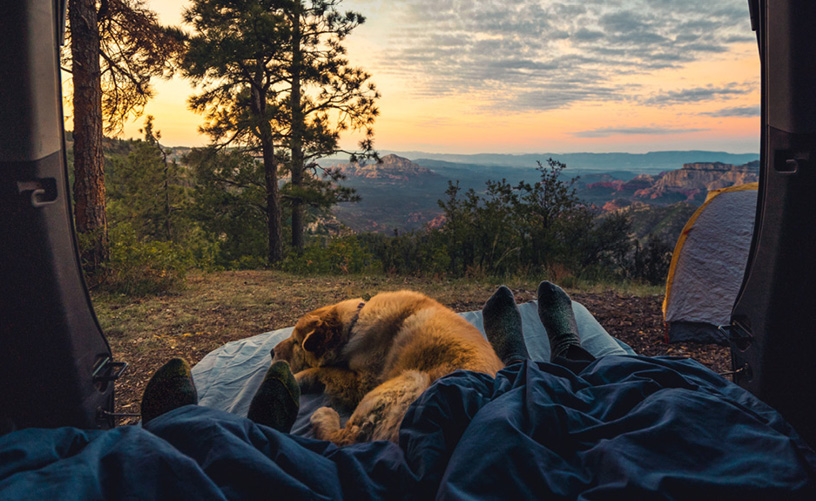
You retain the responsibility
For many people, their dog is like their child. It’s nerve-wracking to leave them behind somewhere. No matter how great the boarding facility may seem or how lovely “grandma and grandpa” are, you still worry. When your dog comes with you on vacation, you retain the responsibility and see how well they do every day.
No hassle with boarding
Dog kennels often fill up quickly, especially during vacation. Arranging good boarding can be a hassle. You may need to plan a year in advance, call kennels, and beg family and friends for help.
Save money
Unless you can leave your dog(s) with your parents or friends, you’ll likely need to rely on boarding facilities and pet-friendly hotels. These can be pretty expensive, especially during school holidays.
It’s fun!
This is, of course, the most important reason. In general, your dog will love exploring new areas with you. And there’s nothing more beautiful than seeing your dog happy and excited!
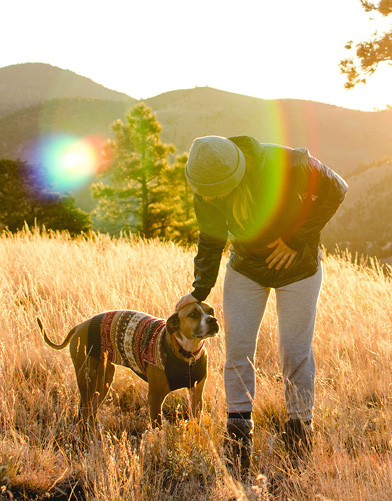
How do you take your dog on vacation?
Taking your dog on vacation requires more planning than just leaving spontaneously. You need to ensure that your destination is dog-friendly and that you have all the necessary items for your dog. It would help if you also practised with your dog beforehand, especially for long trips, to ensure that the journey itself is not too stressful. If you are well-prepared, going on vacation with your dog can be a lot of fun!
The journey
The first thing to consider is the mode of transportation for your vacation. Will you walk, cycle, drive, take the train, or fly? And how far will you be going? Depending on these factors, you must prepare your dog for the journey.
Walking & Cycling
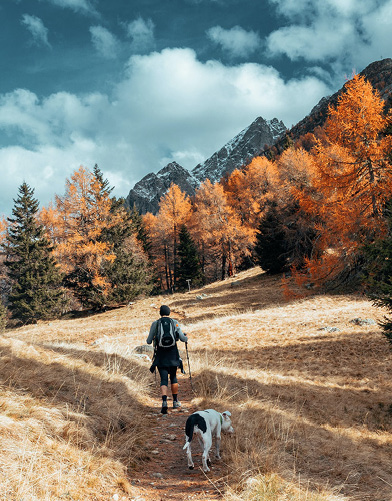
A walking or cycling vacation is ideal for a dog, especially if you plan to travel through off-leash areas. If you have a walking or cycling vacation planned with your dog, start training early. Dogs cannot suddenly walk longer distances overnight. Additionally, walking alongside a bicycle is very strenuous for dogs. Even if they seem fine at the moment, they may experience discomfort later. Build up their stamina gradually by going on longer walks or bike rides. If you plan a long-distance trip, consider scheduling a practice weekend to train your dog for consecutive days of long walks or rides.
Be mindful not to overexert young or older dogs. On hot days, walking alongside a bicycle can be too strenuous for dogs, so it’s better to go cycling only in the mornings and evenings. Always pay attention to the temperature of the asphalt on sunny days. It can heat up quickly. If you can’t place your hand flat on the asphalt, it can burn your dog’s paw pads!
Driving
The car is probably the best mode of transportation when you want to go on vacation with your dog. However, dogs need to learn how to ride in a car before they can go on a (long) journey! If your dog is immediately placed in the back of the car for hours, they can become car sick and stressed. Create a safe space, bring water, and take regular breaks.
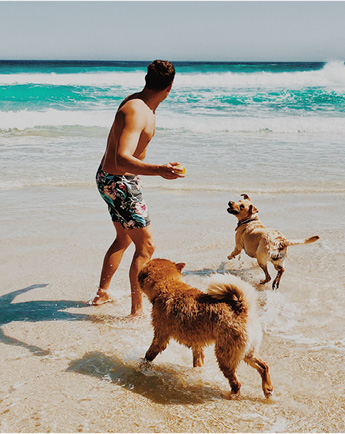
Flying
Traveling by plane with a dog is possible but can be challenging to train and very stressful for many dogs. For larger dogs, a kennel in the cargo hold needs to be booked, while small dogs can often travel in a transport box as carry-on luggage. Contact your airline in advance to inquire about their specific policies. Check which vaccinations your dog needs to fly and practice sitting in a transport crate
At the destination
Choose a destination where your dog is welcome and safe. This can be a dog-friendly hotel, vacation rental, or campground. Ensure that your dog has its own space, preferably with a bed, cushion, or blanket from home. Make sure there are enough shaded areas and that your dog cannot run away. Fortunately, many dog-friendly vacation rentals often have enclosed gardens. Ensure that your dog gets enough exercise but doesn’t overheat. Warm destinations like Southern Europe are less suitable for many dogs.
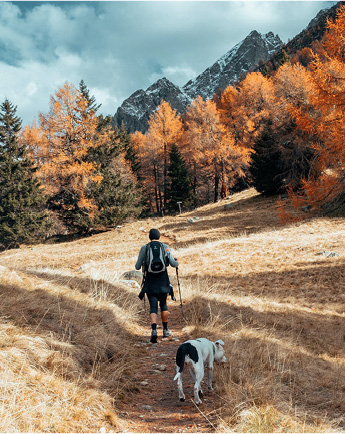
Things to Consider
Check in advance if your dog needs certain vaccinations before crossing the border. When booking a vacation spot, check for enough space, shade, and walking areas available. Before visiting a specific attraction, check if dogs are allowed. Your dog may prefer to stay “at home” rather than spend the whole day in a theme park’s kennel.
What not to forget on a vacation with your dog
Dog passport
When crossing the border, you must bring your dog’s passport, including information about its vaccinations. Certain vaccinations are mandatory in some countries before bringing your dog across the border.
A leash/long line
Even if you normally let your dog run free, it’s a good idea to bring a leash. In some areas, it’s simply not allowed to let your dog run free. In most countries, this applies everywhere within built-up areas anyway.
Enough food
You don’t want to have to switch to a different food halfway through the vacation. This could upset your dog’s stomach!
Plenty of candy
You want to be able to reward your dog anytime, anywhere. So be sure to bring plenty of treats with you when you travel.
A (foldable) water bowl
Make sure you always bring water for your dog when you go for a walk. This is especially true for long walks, walks in hot weather, or walks along the beach. A collapsible water bowl fits in most bags and provides a good, sturdy surface.
Poop Bags and Cleaning Supplies
Remember to pack poops bags to clean up after your dog. Additionally, bring some cleaning supplies, such as pet-friendly disinfectant wipes, in case of accidents or spills.
Sleep spot
Bring your dog’s sleeping spot from home. If the basket is too big, you can just bring the pillow or blanket from the basket. That way, the sleeping spot at your destination will smell just like home. This will help your dog relax more quickly.
Toys
Bring your dog’s favourite toys and chews to keep them entertained during downtime. This will help prevent boredom and provide them with a sense of familiarity.
A ground stake or pen (at the campground)
It is not allowed to let your dog run free at all campgrounds. To give your dog a little space anyway, you can drive a ground stake into the ground and tie your dog to it with a long leash, or set up a pen around your campsite
Sunscreen for dogs
The nose, ears, thighs, and belly of dogs can get sunburned just like human skin. If you know that you will be spending a lot of time in the sun that day, apply particular sunscreen for dogs in those areas.
5 bonus tips
1. Trim your dog beforehand and bring a brush:
By brushing your dog, they will shed their undercoat and can better regulate their body heat. This is especially beneficial on hot summer days. Many dogs also benefit from a good grooming session before a vacation, especially if you’re heading to a sunny destination.
2. Adapt your vacation to your dog
Going on vacation with your dog is a lot of fun and, as mentioned, has many advantages. However, it will only be enjoyable for your dog if you are willing to adjust your vacation plans to accommodate them. Leaving a dog alone in a caravan or making them walk through a scorching city centre on a hot day is not enjoyable for them. Instead, spend much time in nature with your dog and engage in active activities, especially in the mornings and evenings. Remember that puppies, older dogs, overweight dogs, dogs with thick or dark coats, and dogs with short muzzles (such as pugs, bulldogs, boxers, etc.) have a more challenging time dissipating heat and are more prone to overheating. Limit physical exertion for these dogs.
3. Prevent overheating
Overheating can be life-threatening for dogs. Avoid strenuous activity during the midday heat, allow your dog to swim in warm weather (after teaching them how to swim), and create plenty of shaded areas at your vacation destination. A tent area with shade is suitable for a dog. Additionally, various products available nowadays can help keep your furry friend cool in the summer, such as cooling mats, cooling collars, or special cooling jackets.
If your dog is lethargic, panting heavily, and feels warm to the touch, it might be overheating. Drooling or vomiting are further signs. In that case, gradually cool your dog down in the shade by wetting them or covering the hairless areas (belly, paw pads) with a wet towel. Do not use cold water or cover the entire dog, as it will prevent heat dissipation. Provide your dog with lukewarm water to drink. If you have any doubts, don’t hesitate to contact a veterinarian.
4. Purchase a sturdy harness for your dog
Even if your dog usually walks with a collar, it might be wise to invest in a good harness for the vacation. This will allow you to secure your dog more safely in the car and give them more freedom of movement when attached to a leash. A harness also provides better support for your dog while swimming. However, make sure to introduce your dog to the harness gradually.
5. Be cautious with stagnant water
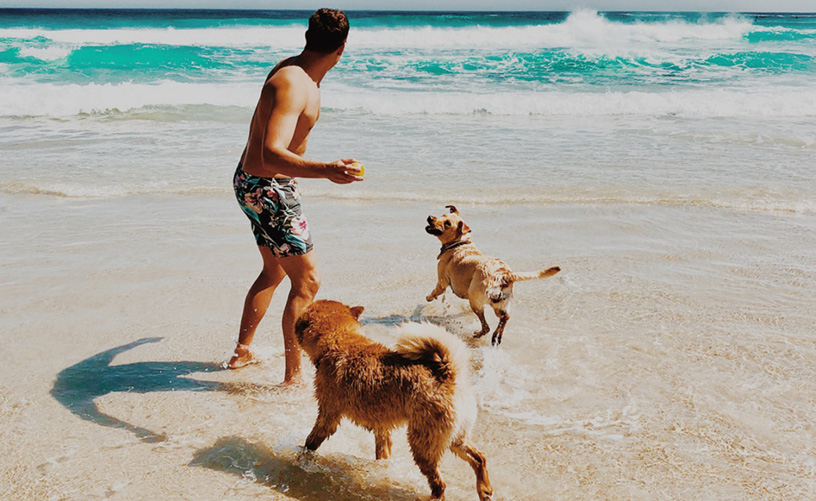
Swimming with your dog during vacation is fun. However, most ponds and lakes can become sources of blue-green algae and botulism during the summer, both dangerous bacteria with severe consequences. Always check if the water is safe before letting your dog swim. Recreational areas where humans are also welcome are usually monitored regularly. If in doubt, choose flowing water for swimming.
Sources: “Tip: Taking Your Dog on Vacation—Here’s How”
-Medpets
Written by Jori Noordenbos

I’m Denise, the founder of Pawness. The company was born out of my love for my dog, Bo, and my search for fair, beautiful products for dogs. I believe that every choice matters: for your dog, for the planet, and for the people behind the products. Through these blogs, I help puppy parents make more conscious choices—without making it complicated.