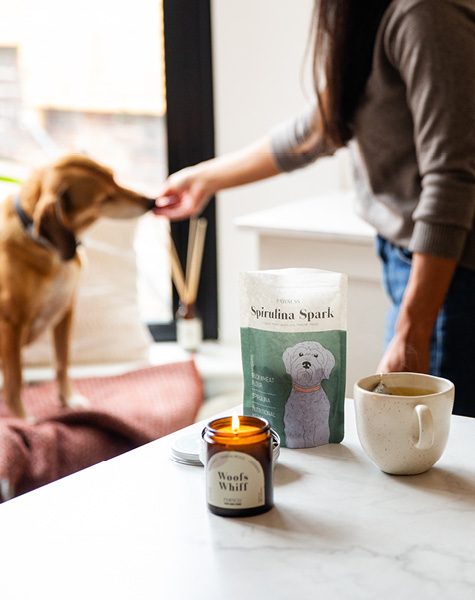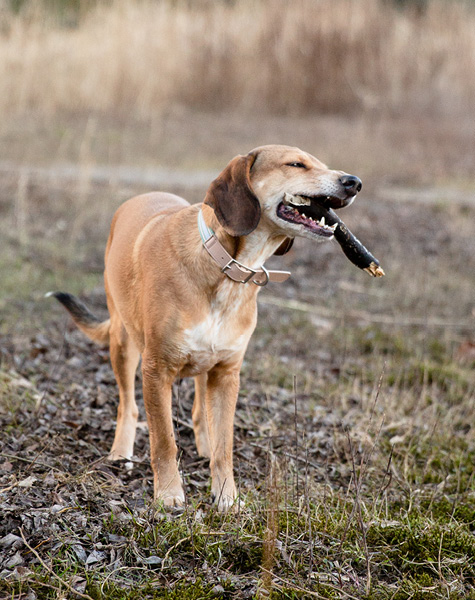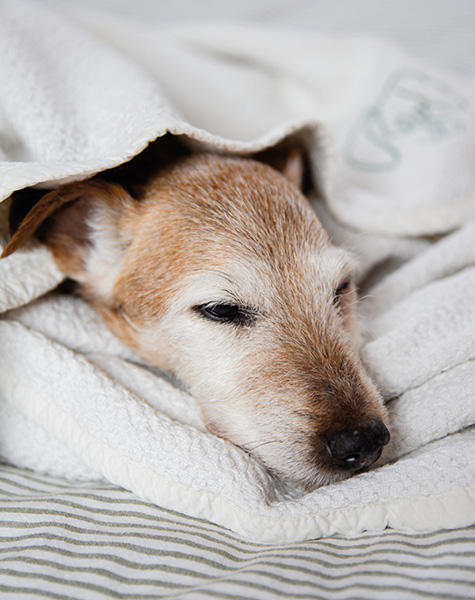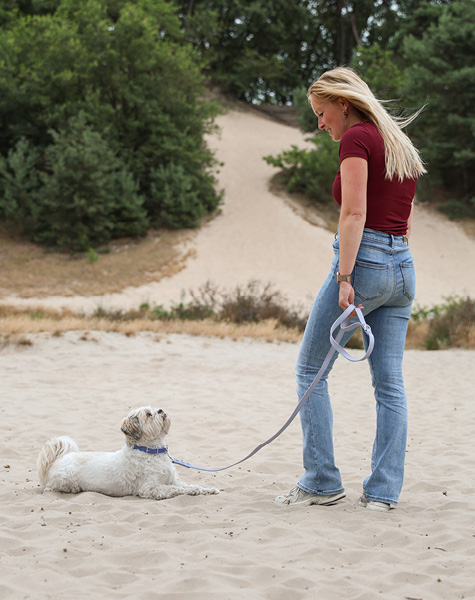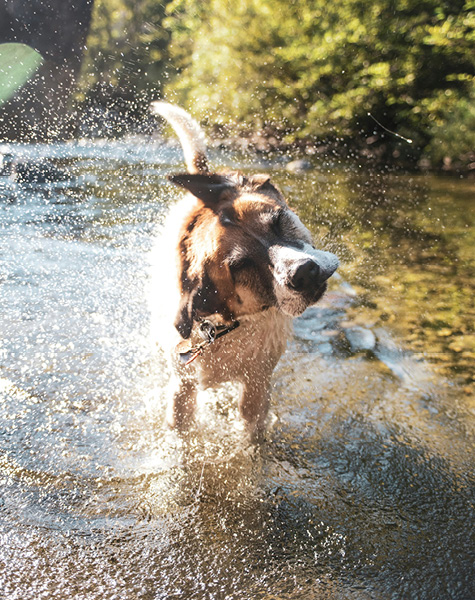
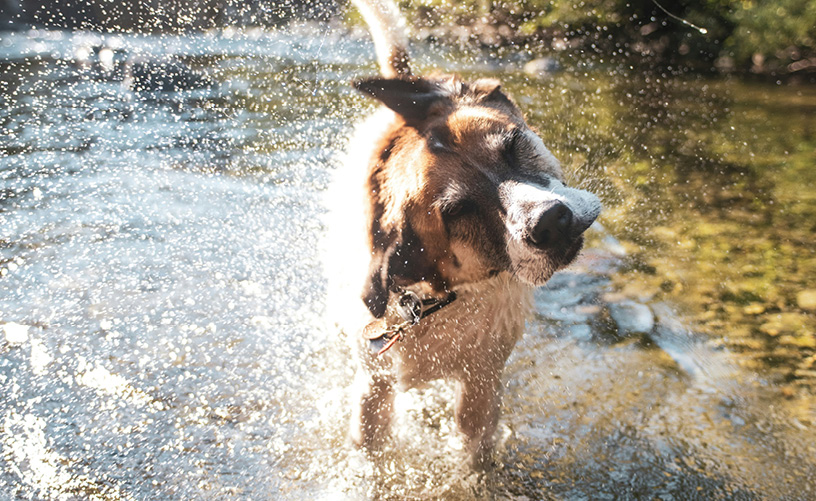
Cleaning your dog without water after a swim is very possible and, in many situations, even the smartest choice. With an absorbent towel, a good dry shampoo, and some extra attention for the paws, ears, and skin folds, you can get your dog clean, dry, and fresh, even when there is no shower or garden hose nearby. This article explains step by step how to do it, which products can help, and when a full wash is the better option.
Whether you are on holiday, just back from a day at the lake, or simply want to keep your bathroom from ending up covered in sand, the tips below are for every dog owner who wants to care for their four-legged friend in a thoughtful, gentle way. Both out and about and at home, a good routine makes a difference to the coat’s condition in the long term.
Why cleaning your dog without water after swimming is sometimes the smartest choice
Swimming is a great source of joy for many dogs. But after a dip in a lake, the sea, or a river, the coat is full of sand, salt, algae, or simply swimming water. It can be tempting to head straight for the shower, but excessive washing has consequences. Every wash removes part of the natural oil layer that protects the skin and coat. For a sensitive dog, or a dog with dry skin, washing too often can lead to flakes, itching, and irritated skin.
A thorough bath after every swim is also not always practical. You are on the go, it is cold, your dog is tired, or you simply do not have access to warm water. These are exactly the situations where cleaning your dog without water proves its value, both for your dog’s healthy skin and for your own convenience. This is especially true when you are outdoors: by a lake, at the beach, or during a camping weekend, you rarely have a shower within reach.
Step one: dry your dog immediately after swimming
The first step is always drying. Dry your dog thoroughly straight after swimming with an absorbent towel to remove excess moisture from the coat. This applies not only to the top of the coat, but also to the belly, the base of the tail, and the inside of the legs: areas that are easily missed, but stay damp longer than the rest of the coat. The more thoroughly you dry, the easier all the next steps will be.
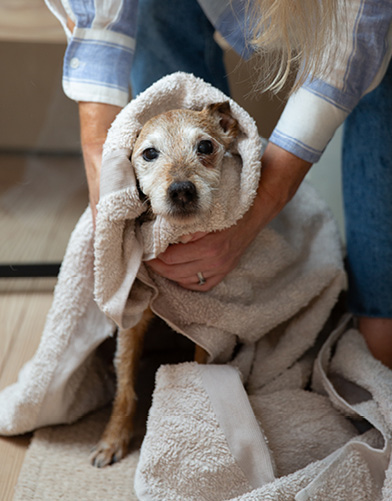
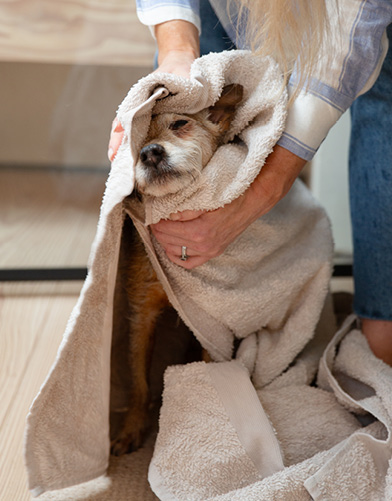
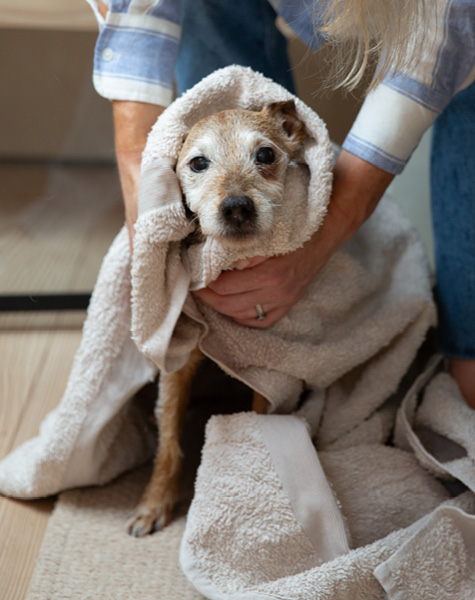
Pay extra attention to the paws, ears, and skin folds. Moisture that remains in these areas can cause irritation or infections, especially in dogs that are naturally more sensitive. Check the ears after swimming. Moisture in the ear canal is a known cause of ear infections, especially in dogs with floppy ears. A dry washcloth or small towel works well for drying these areas thoroughly and for spotting any skin irritation early.
For a dog with a long coat or a thick coat, drying takes a little more patience. The top layer of the coat dries quickly, but the undercoat holds on to moisture. Take the time to work through the coat as well, or use a microfibre towel that absorbs more moisture than a regular bath towel. A well-dried coat is the foundation for all the next steps and helps prevent odours from the swimming water from settling deeper into the hair.
Cleaning your dog without water: the role of dry shampoo
Once the heaviest layer of moisture has been removed, dry shampoo comes in. A dry shampoo for dogs helps remove sand, dirt, and unwanted odours without requiring a wash. That makes it a practical product not only after swimming but also after a muddy walk or a day outdoors.
Dry shampoo offers gentle cleansing of the skin and the coat surface, without the need for water. It is therefore a good middle ground for situations where you want to freshen up your dog but a full wash is unnecessary or undesirable. For dogs with sensitive skin, it is also a way to keep the coat cared for without disrupting the natural protective layer.
When choosing a dry shampoo, pay attention to the ingredients. Products with artificial fragrances or a strong scent can cause skin problems in some dogs. Preferably choose a formula without parabens or sulphates, as this is gentler on the skin and safer for dogs that sometimes lick their coat.
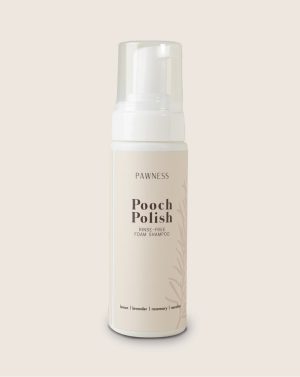
The Pooch Polish Foam Dry Shampoo from Pawness is a foam formula made with 100% natural ingredients and is free from parabens and sulphates. The scent combines lemon, lavender, rosemary, and nerolina; refreshing without being overpowering. The foam is applied to a dry or slightly damp coat, gently massaged in, and then dried or brushed out. It is also suitable for puppies, which is useful if you want young dogs to get used to a grooming routine early on.
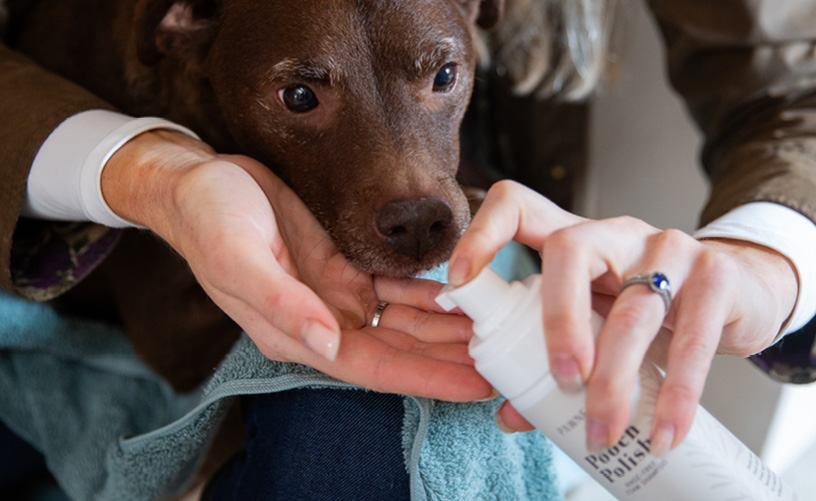
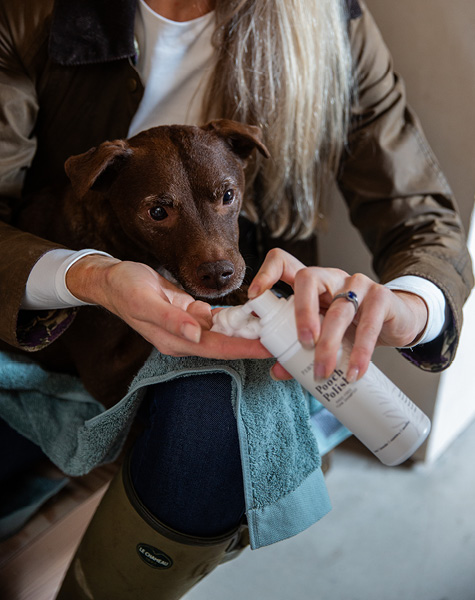
Applying dry shampoo evenly is important. Work through the coat in sections so the product reaches everywhere, and you do not miss any spots. For a dog with a shorter coat, this is quicker than for a breed with a fuller coat, but with a systematic approach it works well for both coat types.
Brushing after swimming: do not forget this step
Brush the coat once it is mostly dry to remove loose hair, tangles, and any remaining dirt. This is a step many people skip, but it makes a real difference, especially for dogs with long coats. Wet tangles left in place tighten as the coat dries, becoming much harder to remove.
Brushing also helps loosen any dirt still sitting in the coat after drying. Sand and small twigs sink through the hair and cannot be removed with a towel alone. Brushing after drying makes the coat cleaner than drying alone and gives you a chance to check for ticks, small wounds, or irritation, so any problems can be noticed early. Ticks are active in tall grass and shrubs along the water, exactly the areas where dogs like to wander after a swim.
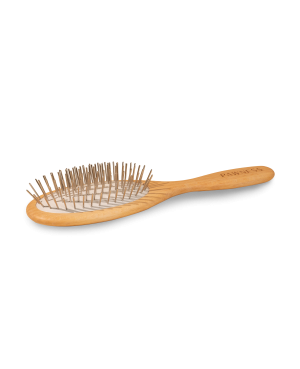
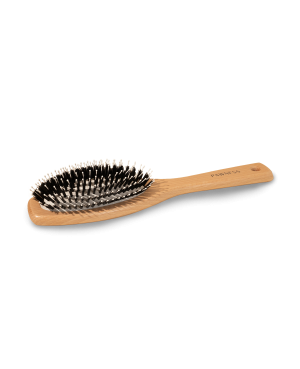
For dogs with a thick coat or a lot of undercoat, a brush with curved pins is the most effective option, such as the Curved Slicker Brush from Pawness. Gentle pressure, a systematic approach, and brushing in the direction of hair growth create the least resistance and the best result. A shiny coat after brushing is also a sign that the cleaning went well. Hair that is smooth and free from dirt reflects light better.
When you should still wash your dog: using the right shampoo
There are situations where a dry shampoo is not enough and a full wash is the only right choice. A dog that has swum in salt water or heavily polluted water should preferably be rinsed with clean water as soon as possible. If that is not possible right away, clean the coat temporarily with a dry shampoo and a damp cloth. But salt that stays on the coat for too long can dry it out and cause irritation; after exposure to heavily polluted water, thorough cleaning is better than simply drying the surface.
When using shampoo, pay attention to the product’s formula. Harmful chemicals such as sulphates, parabens, and artificial fragrances place unnecessary strain on the skin and, with repeated use, are known to cause dry, flaky skin. Choose a special dog shampoo with active ingredients that cleanse without stripping the coat or drying out the skin. Human shampoo is not an option, as the pH value is too harsh for a dog’s skin.
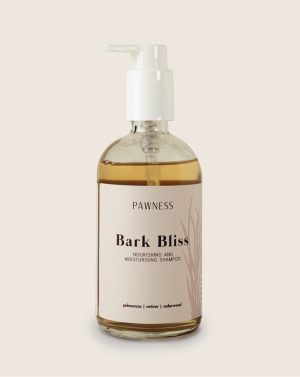
The Bark Bliss Dog Shampoo nourishes and hydrates the coat with palmarosa, vetiver, and cedarwood. It is a formula designed for dogs with dry or itchy skin. After use, the coat feels soft and retains a fresh scent without becoming overpowering.
It is available in a 250 ml glass bottle with a matching refill pouch, which reduces the amount of plastic packaging. As a follow-up after washing, the Bark Bliss Conditioner hydrates the coat, helps prevent tangles, and leaves the hair feeling soft and glossy, which is especially pleasant for dogs with longer coats.
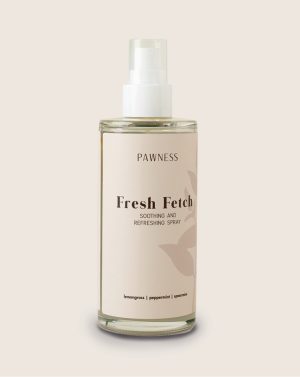
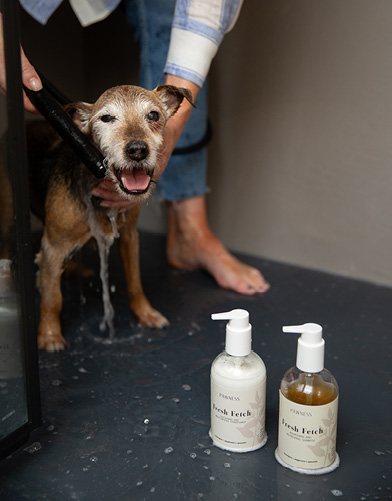
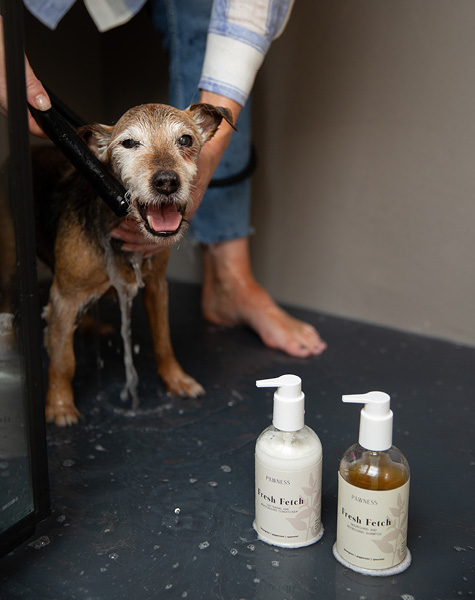
For dogs that tolerate an invigorating cleanse, or for owners who enjoy a lighter, citrus-like scent, the Fresh Fetch Dog Shampoo is a good alternative. The formula neutralises odours with lemongrass, peppermint, and spearmint, is 100% vegan and free from harsh additives, and is also suitable for puppies from twelve weeks old. The matching Fresh Fetch Conditioner hydrates the coat after washing, leaves the hair soft, and helps prevent tangles.
Special attention for dogs with short coats, long coats, and sensitive skin
The approach differs slightly depending on the type of coat. For a dog with a short coat, the coat dries quickly after swimming and is relatively easy to clean. A good towel dry, a quick check of the folds and paws, and possibly a dry shampoo are usually enough for a short-coated dog after a normal swim.
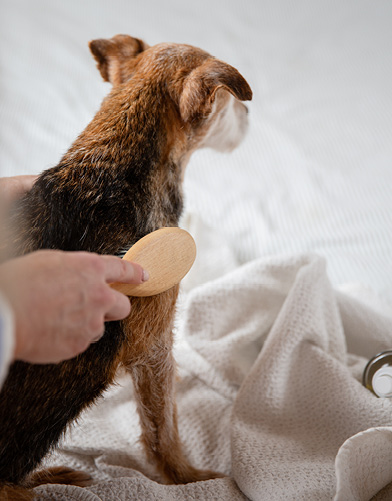
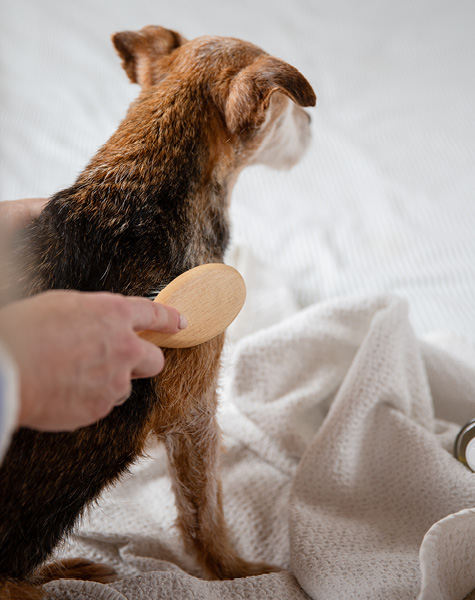
A dog with a long coat needs more attention. The coat holds moisture for longer, tangles form more quickly, and sand or dirt sinks deeper into the coat. Dry thoroughly, brush systematically, and use dry shampoo if any odour or surface dirt remains. If you want to keep the coat soft and help prevent tangles after washing, use a conditioner that hydrates the hair and keeps it supple.
For dogs with sensitive skin, less is more. Excessive washing disrupts the skin’s protective layer. Use dry shampoo as an in-between step whenever possible, choose a mild, plant-based shampoo when a wash is necessary, and check after drying for any visible redness or skin irritation. Puppies also need extra attention to their skin. Their skin is thinner and more sensitive, so products without harsh additives are especially important.
It is also a misconception that dry shampoo is only suitable for cats or breeds with long coats. A dog with a short coat that swims regularly or spends a lot of time outdoors also benefits from a gentle freshening up. The coat stays fresh-smelling, the skin is not placed under unnecessary strain, and you preserve the natural protective layer that gives the coat its shine and resilience. A dog with a shorter coat has fewer protective layers, but that does not make the skin less sensitive. Quite the opposite, because there is less insulation.
Summary: cleaning your dog without water, step by step
Cleaning your dog without water after swimming works best when you follow a fixed order. Dry thoroughly straight after swimming, including the paws, ears, and skin folds. Then use a dry shampoo if there is still sand, dirt, or an unwanted odour in the coat. Apply it evenly and work it in well. Brush the coat once it is mostly dry and check the skin for ticks or small wounds at the same time.
After saltwater or heavily polluted water, a thorough wash with a mild, specialised dog shampoo is the sensible choice.
Also think about which products you take with you when you are on the go. A bottle of dry shampoo and a microfibre towel take up little space and are enough for most situations. Add a compact brush, and you have everything you need for a complete grooming routine while you are out. That way, swimming never has to mean coming home with a soaking wet, sandy dog.
With the right products and a short, thoughtful routine, you can keep your dog’s coat in good condition. No unnecessary strain on the skin, no clean coat that smells like swimming water again the same day, just a simple approach that works for every dog and every situation.
It starts with making conscious choices: choosing products that respect the skin and coat rather than stressing them, and a routine that suits how you and your dog like to go out together. Whether that means daily swimming trips or an occasional splash in the lake, a good foundation makes a difference in the long term.

I’m Denise, the founder of Pawness. The company was born out of my love for my dog, Bo, and my search for fair, beautiful products for dogs. I believe that every choice matters: for your dog, for the planet, and for the people behind the products. Through these blogs, I help puppy parents make more conscious choices—without making it complicated.